
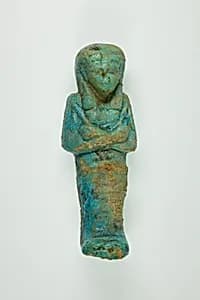
Worker Shabti of Henettawy (C), Daughter of Isetemkheb
Unknown Artist
ca. 990–970 B.C.
Medium
Faience
Dimensions
h. 11.9 × w. 4.4 × d. 3.6 cm (4 11/16 × 1 3/4 × 1 7/16 in.)
Classification
Worker Shabti, Henettawy C
Period
Third Intermediate Period
Department
Egyptian Art
Museum
Metropolitan Museum of Art, New York, NY
Credit
Rogers Fund, 1925
Accession Number
25.3.20.194
Rights
Public Domain
Art Historical Context
This delicate faience shabti, or "worker" figurine, served as Henettawy (C), of the noblewoman Isetemkheb, in the afterlife. Dating to around 990–970 B.C. during Egypt's Third Intermediate Period (asty 21), it embodies the era's blend of royal piety and priestly influence centered in Thebes. Henettawy, likely a high-ranking priestess or chantress, was part of a powerful family whose elaborate burials reflect the period's focus on eternal life amid political fragmentation. Crafted from faience—a glazed composite of quartz, lime, and clay fired to a vibrant turquoise hue— the figurine stands just 11.9 cm tall, capturing a mummiform figure with crossed arms holding tools like a hoe and pickaxe. Faience's luminous blue-green color evoked the Nile's fertile waters and rebirth, making it ideal for mass-produced tomb goods. Inscribed with spells from the Book of the Dead, shabtis like this were activated to labor on behalf of their owner, sparing them toil in the underworld—a clever ancient innovation in funerary magic. Acquired through the Rogers Fund in 1925, this piece from the Metropolitan Museum of Art's Egyptian collection offers a glimpse into Dynasty 21's artisanal finesse and spiritual optimism, reminding us of Egypt's enduring quest for immortality.