
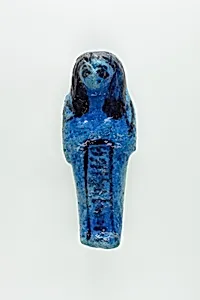
Worker Shabti of Nauny
Unknown Artist
ca. 1050 B.C.
Medium
Faience
Dimensions
H 8.7 × W 3.3 × D 1.9 cm (3 7/16 × 1 5/16 × 3/4 in.)
Classification
Shabti, worker, Nauny
Period
Third Intermediate Period
Department
Egyptian Art
Museum
Metropolitan Museum of Art, New York, NY
Credit
Rogers Fund, 1930
Accession Number
30.3.26.68
Rights
Public Domain
Art Historical Context
Step into the mystical world of ancient Egypt with the *Worker Shabti of Na*, a petite faience figurine from around 1050 B.C. Crafted during Dynasty 21 of the Third Period, this 8.7 cm tall servant statue was designed for Nauny's tomb. Shabtis like this one—meaning "answerer"—were magical workers meant to labor on behalf of their owner in the afterlife, tending fields or performing chores so the deceased could enjoy eternity in peace. Inscribed with spells from the Book of the Dead, it embodies the Egyptians' profound belief in immortality and the afterlife's demands. Faience, a glazed ceramic made from crushed quartz and colored with copper for its vibrant turquoise hue, was ideal for these tomb guardians. Symbolizing rebirth and the Nile's fertile waters, the medium's glossy finish mimics precious stones while allowing mass production of detailed figures. This worker shabti, likely one of many in Nauny's Deir el-Bahri burial cache, highlights the era's blend of piety and artistry amid political fragmentation between northern and southern Egypt. Acquired through the Rogers Fund in 1930, this Met Museum treasure offers a tangible link to a high priestess's world, reminding us how everyday "servants" ensured divine rest for the elite.