
Worker Shabti of Nauny
Unknown Artist
ca. 1050 B.C.
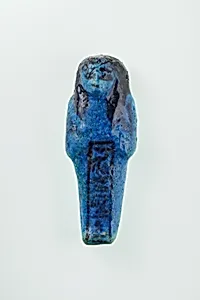
Medium
Faience
Dimensions
H. 8.8 × W. 3.3 × D. 2.1 cm (3 7/16 × 1 5/16 × 13/16 in.)
Classification
Shabti, worker, Nauny
Period
Third Intermediate Period
Department
Egyptian Art
Museum
Metropolitan Museum of Art, New York, NY
Credit
Rogers Fund, 1930
Accession Number
30.3.27.53
Rights
Public Domain
Tags
Art Historical Context
Step into the mystical world of ancient Egyptian afterlife beliefs with the *Worker Shabti of Na*, a petite faience figurine from around 1050 B.C. Crafted during Dynasty 21 of the Third Period, this 8.8 cm tall figure represents a servant meant to labor for Nauny—a high-ranking woman likely from Thebes—in the realm of the dead. Shabtis like this one were essential tomb companions, inscribed with hieroglyphs from the Book the Dead, commanding them to perform tasks so the deceased could enjoy eternal leisure. Faience, a glazed composite of quartz, lime, and clay fired to a vibrant turquoise hue, was prized for its gem-like brilliance, evoking the Nile's fertile waters and rebirth. This medium allowed mass production of these "worker" ushabtis (overseers managed teams of them), reflecting Egypt's sophisticated understanding of materials and magic. Nauny's shabtis, found in her tomb, highlight the era's blend of piety and artistry amid political fragmentation. Today, at the Metropolitan Museum of Art (acquired via the Rogers Fund in 1930), this delicate piece invites us to ponder ancient hopes for immortality—small in size, immense in cultural resonance.