
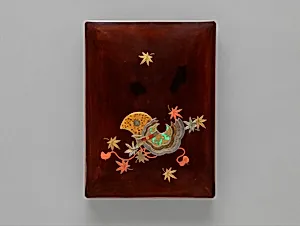
Writing Box with Design of Maple Leaves and Bugaku Hat from the Tale of Genji
18th century
Medium
Gold and glazed pottery on colored lacquer inlaid with mother-of-pearl
Dimensions
H. 1 1/2 in. (3.8 cm); W. 7 in. (17.8 cm); L 9 1/2 in. (24.1 cm)
Classification
Lacquer
Culture & Period
Japan · Edo period (1615–1868)
Department
Asian Art
Museum
Metropolitan Museum of Art, New York, NY
Credit
The Howard Mansfield Collection, Purchase, Rogers Fund, 1936
Accession Number
36.100.141a–e
Rights
Public Domain
Tags
Art Historical Context
This exquisite writing box (suzuribako), crafted by the renowned Edo-period artist Ogawa HaritsuRitsuō) in the 18th, exemplifies the pinnacle of Japanese lacquer artistry. Haritsu, a master of lacquerware and ceramics, created this portable desk accessory—measuring just 1 1/2 inches high—for holding inkstones, brushes, and paper. Its compact form (7 by 9 1/2 inches) made it ideal for traveling scholars and elites during Japan's peaceful Edo period (1615–1868), when such objects symbolized refined taste and literacy. The box's surface dazzles with colored lacquer inlaid with shimmering mother-of-pearl (a technique called raden) and accents of gold, overlaid with glazed pottery elements. The design features vibrant maple leaves and a bugaku hat, evoking scenes from *The Tale of Genji*, the world's first novel by Murasaki Shikibu (early 11th century). Bugaku hats, worn in imperial court dances, nod to Heian-era aristocracy, blending literary nostalgia with natural motifs in a harmonious Rinpa-inspired aesthetic. As part of the Metropolitan Museum of Art's Asian Art collection (acquired via The Howard Mansfield Collection in 1936), this piece highlights lacquer's cultural prestige in Japan. It wasn't just functional but a canvas for storytelling, inviting viewers to ponder the elegance of Genji's world amid autumnal beauty.