
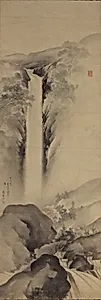
田崎草雲筆 養老の滝|Yōrō Waterfall
dated 1887
Medium
Hanging scroll; ink and color on silk
Dimensions
38 3/8 x 13 in. (97.5 x 33 cm)
Classification
Paintings
Culture & Period
Japan · Meiji period (1868–1912)
Department
Asian Art
Museum
Metropolitan Museum of Art, New York, NY
Credit
The Howard Mansfield Collection, Purchase, Rogers Fund, 1936
Accession Number
36.100.77
Rights
Public Domain
Tags
Art Historical Context
Tazaki Sōun's *Yōrō Waterfall* (1887) captures one of Japan's most legendary natural wonders in a stunning hanging scroll of ink and color on silk Measuring 38 3/8 x 13 inches, this Meiji-period work (1868–1912) the cascading Yōrō Falls in Gifu Prefecture, famed in folklore for tales of enchantment—like a peasant transformed into a noble by its magical waters. Sōun, a skilled painter of landscapes, renders the torrent with dynamic energy, using fluid ink washes to evoke mist and motion against lush greenery. Hanging scrolls like this were prized in Japanese homes and temples for seasonal display, unrolling to immerse viewers in nature's sublime power. The silk medium allows vibrant mineral pigments to glow, blending traditional East Asian techniques with Meiji-era finesse amid Japan's rapid modernization. Sōun's composition emphasizes verticality and rhythm, drawing the eye upward in shasei (true-to-life sketching), a nod to classical Chinese literati influences. Acquired through The Howard Mansfield Collection at The Metropolitan Museum of Art, this piece highlights enduring reverence for waterfalls in Japanese art—symbols of impermanence and spiritual renewal. Visitors will appreciate its timeless blend of realism and poetry, bridging Japan's ancient traditions with a transformative age.