
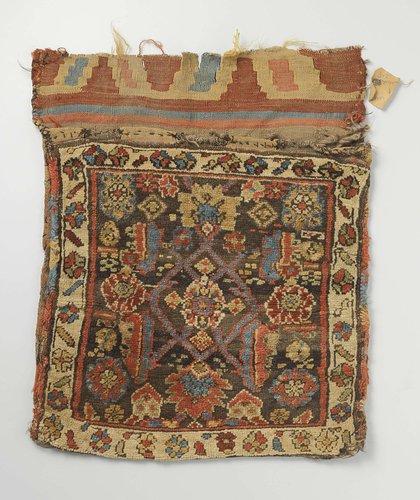
Zadeltas, versierd met gekruiste ranken en bladeren en vier rozetbloemen
Unknown Artist
c. 1800 - c. 1900
Medium
wool
Dimensions
68; 54
Rights
Public Domain
About this artwork
height 68 cm x width 54 cm
Art Historical Context
Step into the world of 19th-centuryquestrian craftsmanship with *Zadeltas, versd met gekruisteen en bladeren en rozetbloemen*, finely wrought wool saddlebag measuring 68 cm high by 54 cm wide. Dating to around 1800–1900, this functional yet ornate piece served as a practical pouch for carrying goods on horseback, blending utility with decorative flair. Its title reveals a symmetrical design of crossed vines and leaves framing four rosette flowers—classic motifs evoking nature's abundance and often symbolizing fertility or protection in folk traditions. Crafted from wool, the medium highlights the era's mastery of textile techniques, likely involving intricate weaving or embroidery by an unknown artisan. Wool's durability made it ideal for nomadic or rural lifestyles, where such saddlebags were everyday essentials in regions reliant on horses for travel and trade. The bold, repeating patterns suggest influences from ethnographic textile arts, possibly Central Asian or European folk styles, where floral embellishments added personal or cultural prestige to humble objects. This artifact offers a window into pre-industrial life, showcasing how anonymous makers transformed everyday items into works of quiet beauty. A testament to enduring craftsmanship, it reminds us of the artistry hidden in the tools of daily survival.