
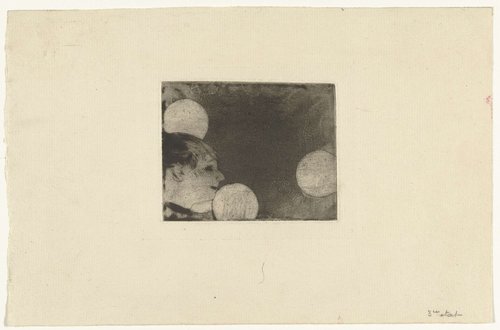
Zangeres en profil bij vier gaslampen in donkere omgeving
1877 - 1878
Medium
drypoint
Dimensions
238; 155; 86; 68
Rights
Public Domain
About this artwork
blad: hoogte 155 mm x breedte 238 mm
Art Historical Context
Edgar Degas’s intimate drypoint captures a female singer in profile, illuminated by the warm glow of four gas lamps against a shadowy backdrop. Created between 1877 and 1878, the tiny plate—measuring just 68 by 86 millimeters—reflects Degas’s fascination with Parisian café-concert and theater performers. As a leading figure of the Impressionist movement, Degas frequently explored modern urban life, using light and fleeting gestures to evoke atmosphere rather than narrative detail. Drypoint was an ideal medium for this effect. By scratching directly into the copper plate, Degas produced soft, velvety lines that beautifully suggest the hazy radiance of gaslight. The small scale and delicate burr give the print an almost private, sketch-like quality, inviting viewers to lean in and share the singer’s momentary spotlight. Though modest in size, the work embodies Degas’s lifelong interest in the interplay of performance, illumination, and darkness—hallmarks of late-nineteenth-century Paris nightlife. The larger sheet on which it is printed further emphasizes the jewel-like intensity of the image, drawing the eye to the singer’s poised silhouette.
About the Artist
Edgar Degas · 1834–1917
Edgar Degas (1834-1917) stands as one of the most innovative artists of the nineteenth century, whose distinctive vision transformed how modern life could be depicted on canvas. Born Hilaire-Germain-Edgar De Gas in Paris to a wealthy banking family—his father French, his mother a Louisiana Creole from New Orleans—Degas received a classical education before abandoning law studies in 1855 to pursue ...