
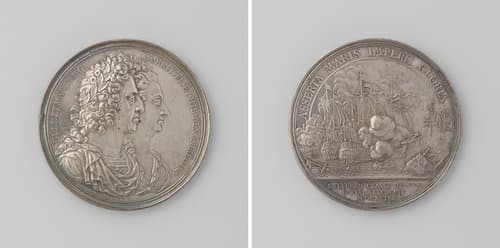
Zeeslag bij Kaap La Hogue, de Fransen verslagen door de vloot van Engeland en Holland
Medium
striking (metalworking)
Dimensions
5.6; 82.73
Rights
Public Domain
About this artwork
Gift of J.M. van Gelder-Nijhoff
Art Historical Context
Behold the intricate medal *Zeeslag bij Kaap La Hogue, de Fransen verslagen door deot van Engeland en* (Sea Battle at Cape La Hogue, the French Defeated by the Fleets of England and Holland), crafted by Dutch artist Jan Smeltzing () in 1692. This small yet weighty piece—measuring 5.6 cm in diameter and weighing 82.73 grams—captures a pivotal moment of naval triumph during the Nine Years' War. Smeltzing, a skilled medalist working in the Dutch Golden Age tradition, commemorates the Anglo-Dutch victory over the French fleet off the coast of Normandy, a battle that thwarted Louis XIV's invasion plans and bolstered the Grand Alliance. Struck through metalworking techniques, where a detailed die is hammered against a metal blank to create raised relief imagery, this medal exemplifies 17th-century numismatic art. Such objects were prized not just as currency or tokens but as portable propaganda, celebrating Protestant naval prowess and national pride. The precise striking allowed for fine details of ships clashing amid churning waves, evoking the chaos and glory of battle. Generously donated by J.M. van Gelder-Nijhoff, this artifact offers a tangible link to an era when art and politics intertwined on the high seas, reminding us how victories were etched into history—quite literally—for generations to admire.