
Zesdelig kamerscherm
ca. 1650 - ca. 1750
Medium
wood (plant material)
Dimensions
63; 12; 170
Rights
Public Domain
About this artwork
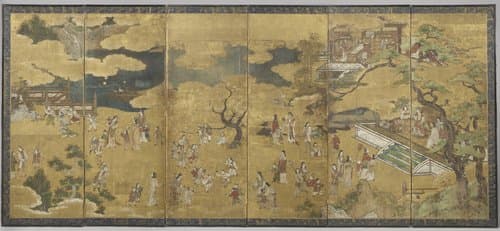
Kamerscherm, zesdelig, voorstellende vrouwen en kinderen onder bloeiende kersen- en pijnbomen.
Art Historical Context
Step into the serene world of this anonymous *Zesdelig kamerscherm*, a six-panel folding screen crafted around 1650–1750 from wood (plant material). Standing at 170 cm tall and 63 cm wide per panel, it elegantly unfolds to depict graceful women and children gathered beneath blooming cherry and pine trees. The delicate floral canopy evokes a peaceful, idyllic scene, blending natural beauty with human harmony in a composition typical of East Asian-inspired decorative arts popular in Europe during this era. Dating to the Dutch Golden Age and the early Enlightenment, such screens were prized imports or imitations from Asia, reflecting Europe's fascination with Japanese motifs amid limited trade via Dejima. Cherry blossoms symbolize fleeting beauty (*mono no aware*), while sturdy pines represent longevity—timeless themes rendered here on wooden panels likely painted or lacquered for durability and luster. These multifunctional pieces served as room dividers, privacy shields, or conversation starters in affluent homes, showcasing cultural exchange between East and West. Though the artist remains unknown, the screen's craftsmanship highlights intricate techniques in woodworking and surface decoration, preserving vibrant naturalism over centuries. A captivating glimpse into 17th–18th-century global tastes! (198 words)
About the Artist
anonymous
In the vast tapestry of art history, "Anonymous" stands not as a singular individual but as a collective designation for countless unidentified creators whose works have endured across millennia. These artists, spanning prehistoric cave painters to medieval illuminators and folk craftsmen, produced the foundational layers of human visual culture. Prior to the Renaissance, when individual fame emer...