
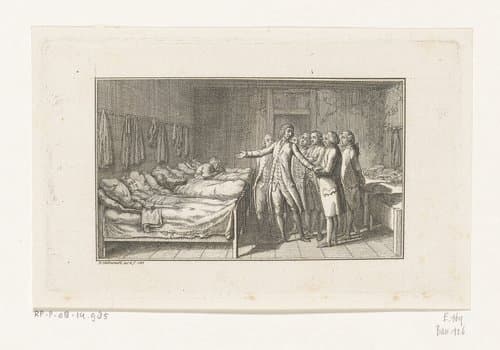
Ziekenzaal van St. Hiob
Medium
etching
Dimensions
151; 93
Rights
Public Domain
About this artwork
collector's mark: Lugt 2228
Art Historical Context
Daniel Nikolaus Chodowie, a prolific Polish-German engraver and illustrator active in Berlin during the Enlightenment era, created *Ziekenzaal van. Hiob* in 1783. This intimate etching, measuring just 93 mm high by 151 mm wide, captures a poignant scene likely set in the sick ward of a charitable institution dedicated to St. Job, a figure symbolizing patience in suffering. Chodowie's works often depicted everyday life with moral undertones, reflecting 18th-century concerns for social welfare, public health, and humanitarianism amid Europe's growing hospitals and almshouses. Rendered in etching—a technique Chodowiecki mastered for its precision and tonal depth—the print showcases his signature style: meticulous line work that conveys textures of bedding, clothing, and weary figures, evoking empathy for the ill and caregivers. Small-scale prints like this were widely circulated, making art accessible beyond elite patrons and influencing public discourse on charity. Bearing the collector's mark Lugt 2228, this piece hails from a distinguished provenance, underscoring its enduring appeal. It exemplifies Chodowiecki's role in bridging Rococo elegance with emerging realist sensibilities, offering visitors a window into the human condition during a time of intellectual and social reform.
About the Artist
Daniel Nikolaus Chodowiecki · 1726–1801
Daniel Nikolaus Chodowiecki (1726–1801) was a German painter and printmaker of Polish-Huguenot descent who became the most celebrated graphic artist in 18th-century Germany. Born in Danzig (now Gdańsk), he created approximately 2,000 etchings that serve as an invaluable visual record of German bourgeois life during the Enlightenment. Largely self-taught, Chodowiecki moved to Berlin in 1743 and ach...