
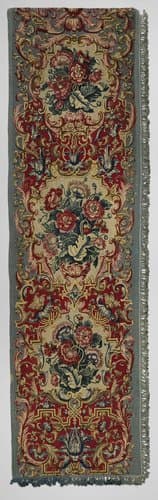
Zijstuk van een cantonnière voor een bed of raamomlijsting met een bloemenpatroon
ca. 1700 - ca. 1725
Medium
tapestry
Dimensions
298; 86
Rights
Public Domain
About this artwork
Zijstuk van een cantonnière, versierd met dubbele klaprozen binnen een omlijsting van rolwerkbanden met voluten en acanthusranken.
Art Historical Context
This elegant tapestry panel, created by the Manufacture Royale deselins between 1700 and 1725, served as a zijstuk—or side piece—for a cantonnière, a decorative canopy to frame either a grand bed or a window. Measuring nearly three meters tall, the work exemplifies the manufactory’s renowned expertise in producing luxurious woven furnishings for the French royal court and aristocracy during the late Baroque period. The design features double poppies nestled within scrolling bands of acanthus leaves and volutes, creating a rich, rhythmic pattern that would have added warmth and grandeur to an interior. Gobelins tapestries like this one were woven on large looms by skilled artisans who translated painted cartoons into intricate textile art, often using fine wool and silk threads to achieve depth and vibrancy. Such pieces were essential elements of opulent room schemes, blending functionality with artistic display. As part of the royal workshops established under Louis XIV, this tapestry reflects the era’s emphasis on splendor and craftsmanship, transforming everyday architectural features into statements of refined taste and cultural prestige.
About the Artist
Manufacture Royale des Gobelins
The Manufacture Royale des Gobelins, a cornerstone of French decorative arts, originated in the mid-15th century as a dyeing workshop established by the Gobelin family along the Bièvre River in Paris's Faubourg Saint-Marcel. Renowned for their scarlet dye, the Gobelins supplied the foundation for what became Europe's premier tapestry factory. In 1601, King Henry IV rented the site to Flemish weave...