
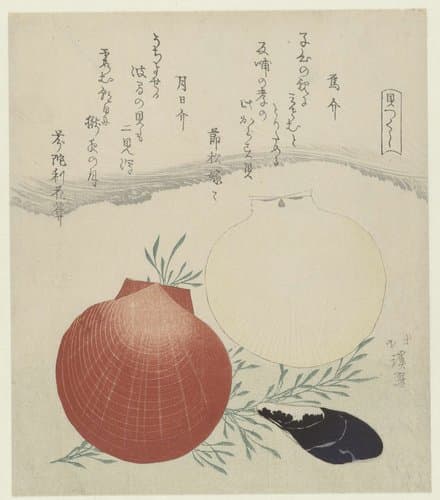
Zoetwatermossel en Japanse zon-en-maan mantelschelp
1821
Medium
nishikie, with metallic pigments and blindprinting
Dimensions
181; 210
Rights
Public Domain
About this artwork
collector's mark, verso, stamped: Lugt 2228
Art Historical Context
Behold the exquisite *Zoetwatermossel en Japanse zon-en-ma mantelschelp* (Freshwater Mussel and Japanese Sun-and-M Cockle), a delicate 1821 woodblock print Totoya Hokkei, prominent ukiyo-e artist pupil of the master Katsushika Hokusai. Measuring just 210mm by 181mm, this *nishikie*—or "brocade picture"—captures two seashells with remarkable precision, reflecting the Edo-period fascination with natural forms amid Japan's vibrant "floating world" culture. Hokkei's mastery shines in the advanced techniques employed: vibrant colors layered through woodblock printing, accented by shimmering metallic pigments that evoke the iridescent sheen of real shells, and subtle blindprinting (embossing) for tactile depth. These luxurious methods, often reserved for elite commissions like *surimono* greeting prints, elevated ukiyo-e from popular art to collector's treasures, blending artistry with technical innovation. Adorned verso with a collector's mark (Lugt 2228), this piece bridges Japanese craft and global appreciation, hinting at its journey to European connoisseurs. A testament to ukiyo-e's enduring allure, it invites us to marvel at nature's quiet beauty through 19th-century eyes.
About the Artist
Totoya Hokkei · 1780–1850
Totoya Hokkei (魚屋 北渓, 1780–1850), born Iwakubo Tatsuyuki in Edo (modern Tokyo), began his life as a humble fishmonger in the Yotsuya Samegahashi district, a trade reflected in his art name "Totoya," meaning fish shop. He transitioned to art through rigorous training, first studying under Kanō Yōsen'in Korenobu, head of the Kobikichō branch of the prestigious Kanō school, where he honed landscape p...