
Zwaardstootplaat
1800 - 1830
Medium
silver (metal)
Dimensions
6.2; 6.7
Rights
Public Domain
About this artwork
height 6.7 cm x width 6.2 cm
Art Historical Context
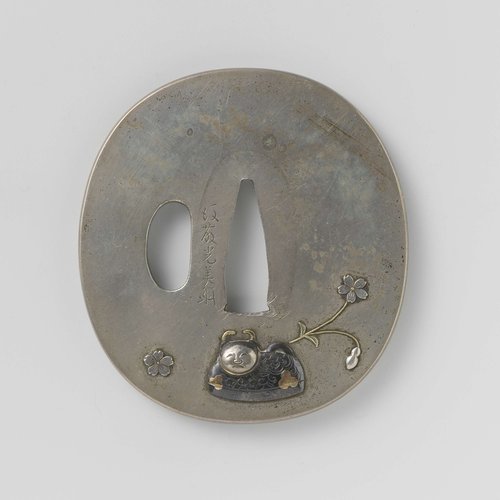
**Zwaardstootplaat Goto Mitsuyoshi (1800–1830)** This exquisite tsuba, or sword guard, known as *Zwaardstootplaat (Dutch for "sword thrust plate was crafted by Goto Mitsuyoshi, a artisan from the renowned Goto school Japanese metalworkers. Measuring just 6.7 cm high by 6.2 cm wide, its petite scale belies its intricate craftsmanship, designed to fit seamlessly on a samurai's katana during Japan's Edo period (16031868). The Goto family, serving generations of shoguns, specialized in luxurious sword fittings that blended functionality with artistry, often adorning the blades of elite warriors. Silver as a medium highlights advanced techniques like hammering, chasing, and piercing, allowing for delicate motifs that evoked nature, mythology, or daily life—hallmarks of the school's realistic yet refined style. Produced in the early 19th century, this piece reflects the peak of Edo metalwork, when peace under the Tokugawa shogunate shifted samurai focus toward cultural refinement and collectible arms. Today, such tsuba symbolize Japan's fusion of martial tradition and aesthetic elegance, prized by collectors for their technical precision and cultural depth. A testament to Mitsuyoshi's skill, it invites visitors to appreciate how everyday objects became portals to samurai heritage.