Ctrl K
1849–1918
Auguste-Louis Lepère (1849–1918), son of the sculptor François Lepère, was born in Paris on November 30, 1849, into an artistic family that shaped his early path. At age thirteen, he apprenticed in the Paris studio of the English wood engraver Joseph Burn Smeeton, honing his skills in wood engraving until 1867. He furthered his training with drawing classes under Horace Lecoq de Boisbaudran at the Petite École (now École nationale supérieure des arts décoratifs), where he formed lifelong associations with fellow engravers Henri Paillard and Eugène Dété. This rigorous foundation propelled him from magazine illustration to mastery in printmaking, as he submitted paintings to the Salons while building his reputation.
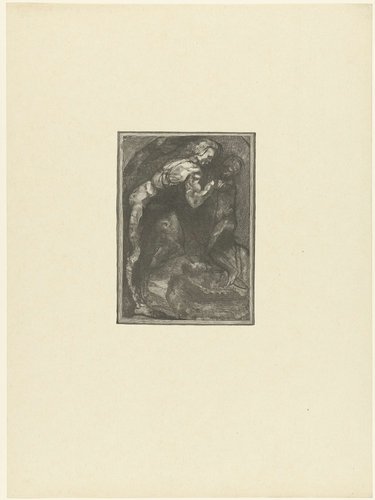
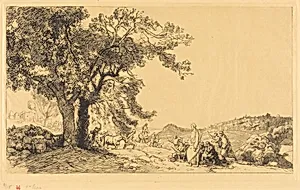
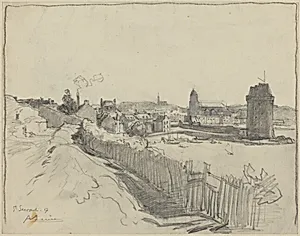
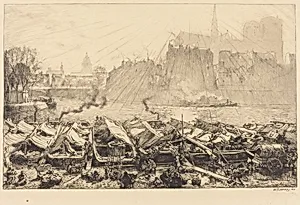
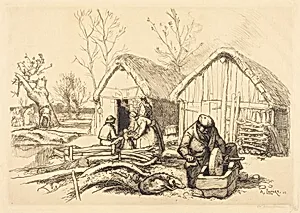
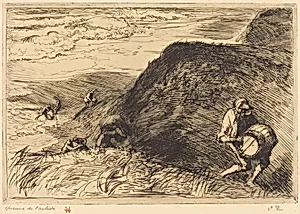
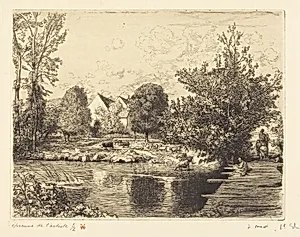
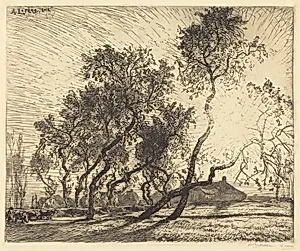
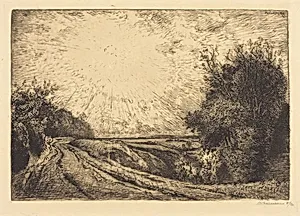
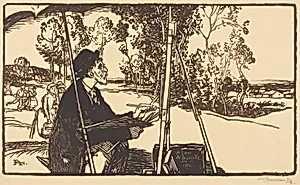
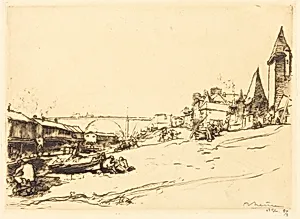
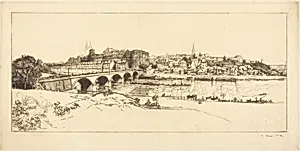
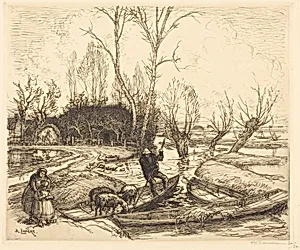
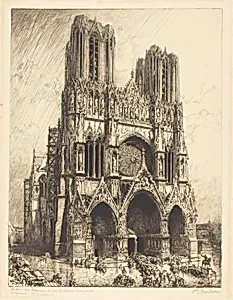
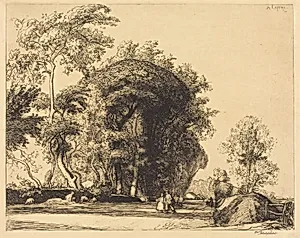
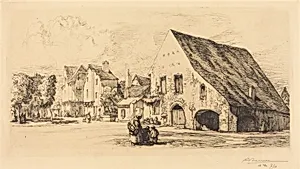
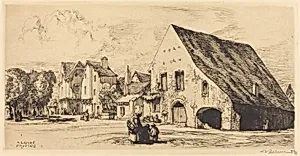
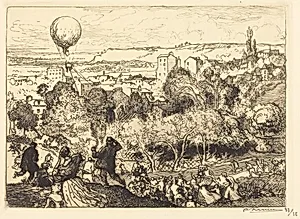
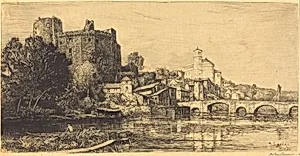
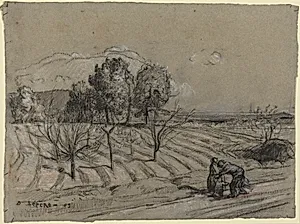
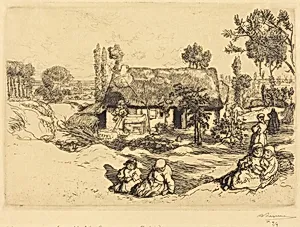
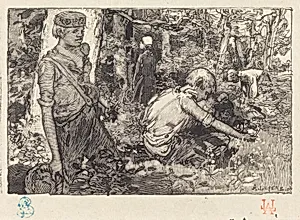
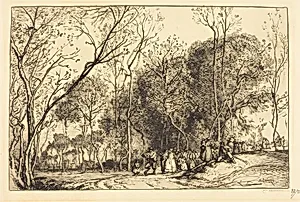
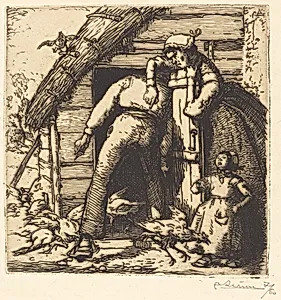
Lepère worked in the revived wood engraving tradition, leading Europe's creative renaissance in the medium during the late 19th century, while embracing japonisme, Romantic influences, and Art Nouveau aesthetics. Rejecting the half-tone "gravure de teinte" trend, he pioneered innovations like color woodcuts on custom-colored papers, combining etching with wood engraving, and multi-block color printing. His subjects captured everyday Parisian life—bustling streets, bridges, and cathedrals—alongside rural Vendée scenes painted en plein air, blending meticulous detail with atmospheric vitality in etchings, aquatints, lithographs, oils, pastels, and even ceramics.
Among his major works are the pioneering color woodcut *Marchands au panier sous une porte rue Mauconseil* (1889); intimate family portraits like *Convalescent, Mme Lepère* (1892); *Laundresses (Blanchisseuses)* (1893); Rouen Cathedral series (1896); *Les Trophées* (1900); and wartime allegories such as *Death and Passions Descend upon the World* and *Kultur* (both 1914). He illustrated seminal books including *Paysages parisiens* (1892) and *Paris au hasard* (1895), producing over 1,000 wood engravings and 150 etchings.
Lepère's legacy endures as a cornerstone of French book illustration and printmaking revival; he co-founded *L'Estampe originale*, earned the Légion d'honneur (Officier, 1911), and saw his works enter collections worldwide, from the Metropolitan Museum of Art to the Musée d'Orsay. His tireless experimentation democratized fine art prints, bridging 19th-century realism with modernist vitality.