Ctrl K
1895–1973
Robert Sargent Austin RA PPRWS PPRE (1895–1973) was a preeminent British engraver, draughtsman, illustrator, and painter, born in Leicester, England, where his prodigious talent emerged early—at just eight years old, he exhibited with the Royal Drawing Society.) He trained first at the Leicester Municipal School of Art from 1909 to 1913, then at the Royal College of Art from 1914–1916 and 1919–1922, his studies interrupted by service as a gunner in the Royal Artillery during World War I. There, he studied etching under the renowned Sir Frank Short, honing a meticulous technique that propelled him to win the prestigious Rome Scholarship in Engraving in 1922.) In Italy, at the British School at Rome, he met and married writer Ada May Harrison, for whom he later illustrated books; the couple had three children—son Robert and daughters Rachel and Clare—and Ada's sister Rose was wed to sculptor James Woodford RA.)
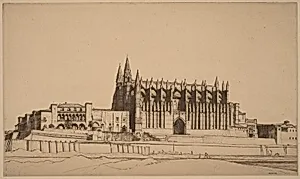
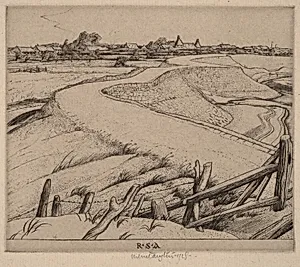
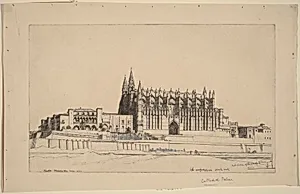
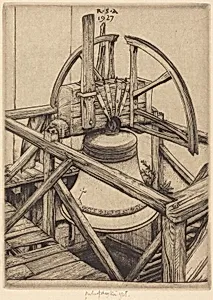
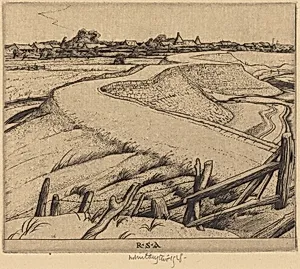
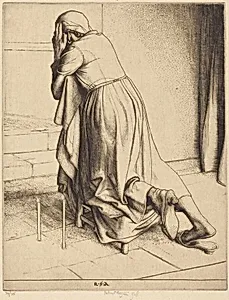
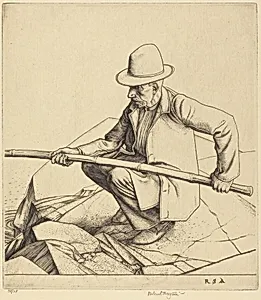
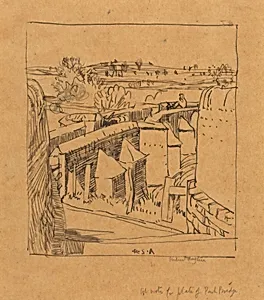
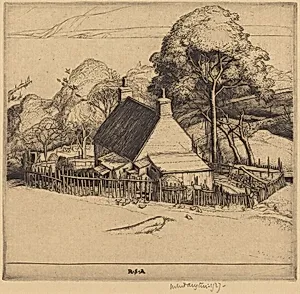
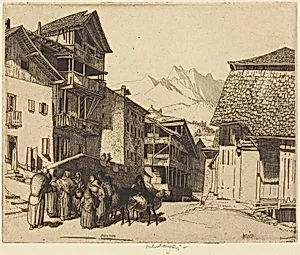
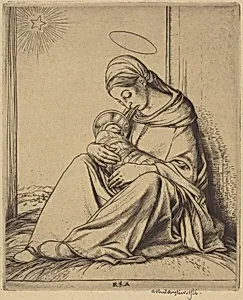
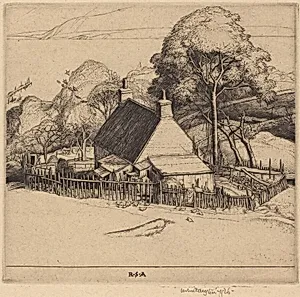
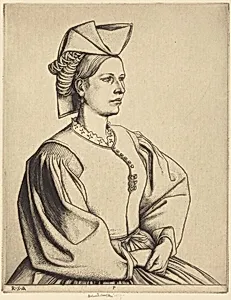
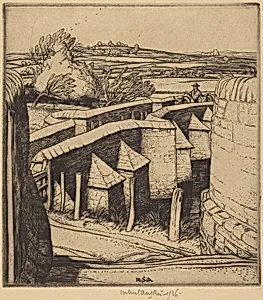
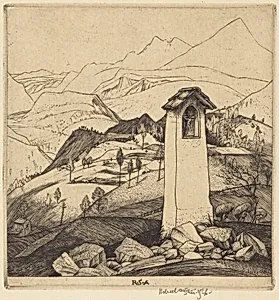
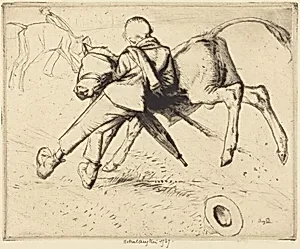
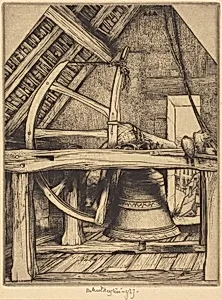
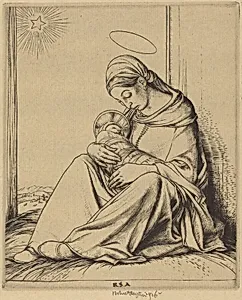
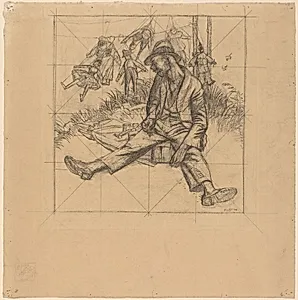
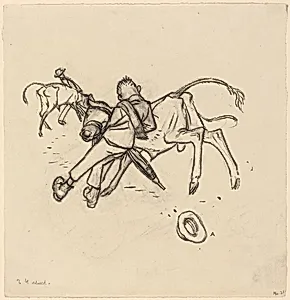
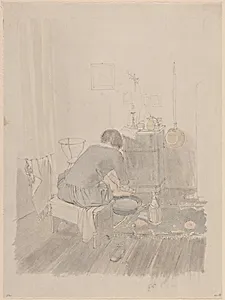
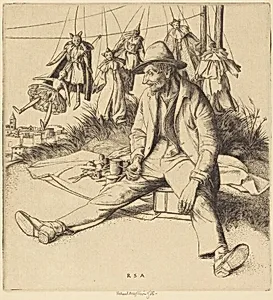
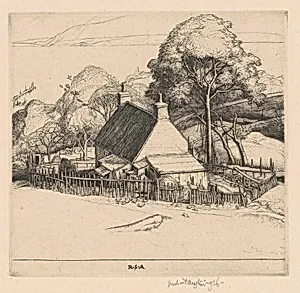
Austin worked in the etching revival tradition of the 1920s–1930s, crafting copper plates with extraordinary fine detail in an almost Pre-Raphaelite style, while his vigorous draughtsmanship captured everyday life and labor.) A Fellow of the Royal Society of Painter-Etchers and Engravers from 1927 (president 1962–1973), he taught engraving at the Royal College of Art from 1927, later becoming Professor of Engraving (1946) and Graphic Design (1948–1955). As an Official War Artist in World War II, he produced compelling drawings of Women's Auxiliary Air Force personnel, balloon barrages, and nursing services. Major works include his catalogued etchings from 1913–1929, the 1943 'Our Heritage' portrait series for London Transport (featuring Lord Nelson, Winston Churchill, and others), *Mason of Canterbury* (1948), and designs for Britain's ten-shilling and one-pound banknotes issued in the early 1960s.)
Elected Associate Royal Academician in 1939 and full RA (engraver) in 1949, Austin also served as President of the Royal Watercolour Society from 1957 until his death, advising the Bank of England on currency (1956–1961). He converted a Methodist chapel in Burnham Overy Staithe into a studio for landscape painting. Hailed as one of Britain's foremost mid-twentieth-century printmakers and the last great English engraver, his oeuvre—spanning over 123 works in collections like the National Gallery of Art—endures for its technical mastery and humanistic depth.)