Ctrl K
1799–1823
Ryūryūkyo Shinsai (柳々居辰斎), active from 1799 to 1823, was a prominent Japanese ukiyo-e printmaker based in Edo (modern Tokyo), renowned for his mastery of surimono—luxurious, privately commissioned woodblock prints produced for elite poetry circles and New Year's celebrations. He began his training under Tawaraya Sōri before becoming a student of the legendary Katsushika Hokusai, from whom he received his art name "Shinsai" around 1800; he later adopted the go "Ryūryūkyo," echoing his first teacher's style. This dual mentorship rooted Shinsai in the refined traditions of ukiyo-e while honing his poetic sensitivity, essential for surimono that blended visual elegance with inscribed kyōka verses.
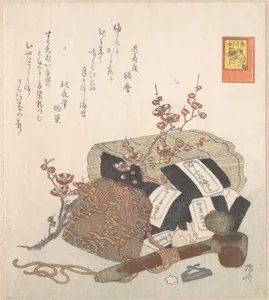
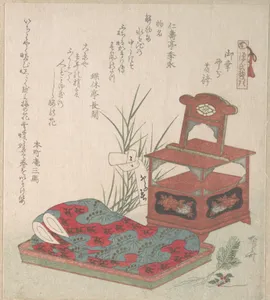
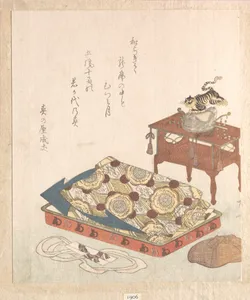
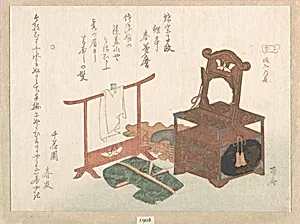
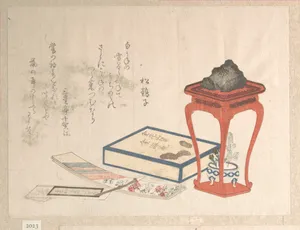
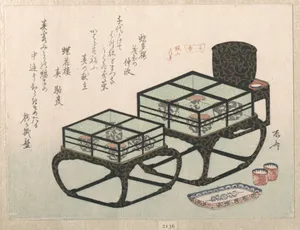
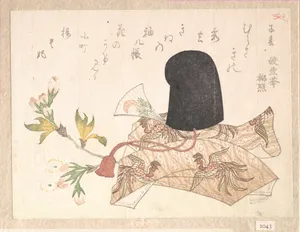
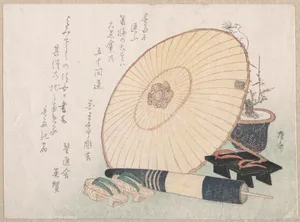
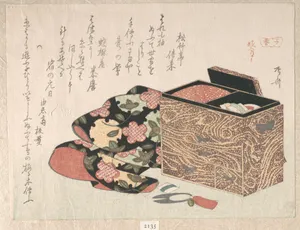
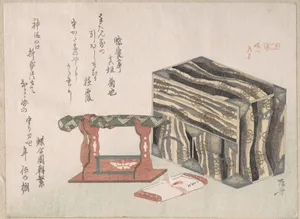
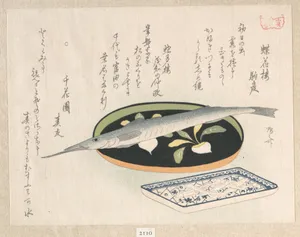
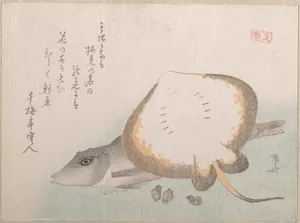
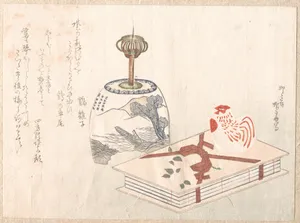
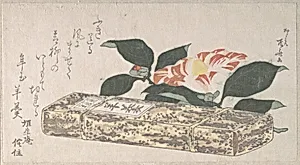
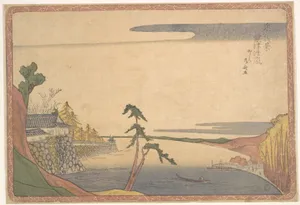
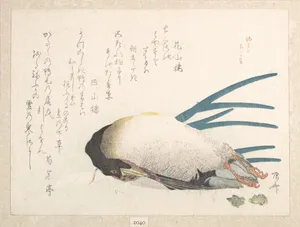
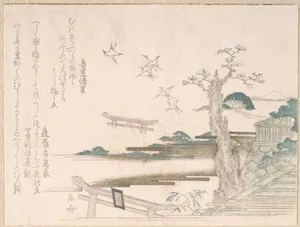
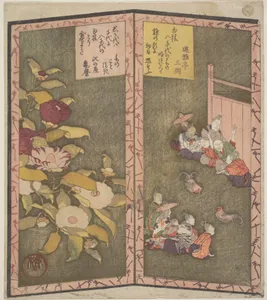
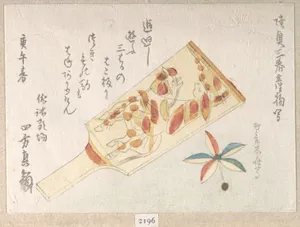
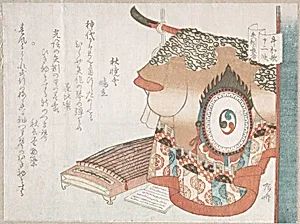
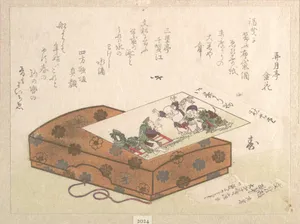
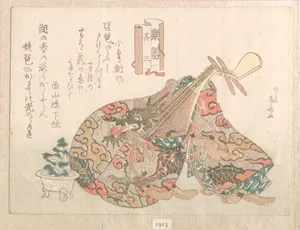
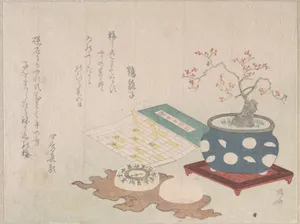
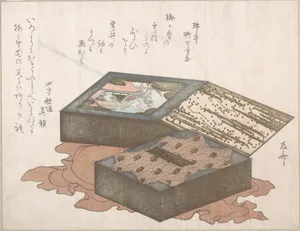
Shinsai worked in the ukiyo-e tradition, illustrating books and designing single-sheet prints, but he excelled as one of the era's most prolific surimono artists, rivaling Hokusai in output during the early 1800s. His prints featured meticulous still lifes of seasonal delicacies, marine life, and scholarly objects, embellished with gold, silver, mica, embossing, and lacquer for a tactile opulence that reflected patrons' wealth and refinement. Innovatively, he incorporated Western one-point perspective and shading in landscapes, bridging Japanese and European techniques.
Among his celebrated works are *New Year's Sake and Sushi* (ca. 1810), an exquisite arrangement evoking festive indulgence; *Instruments and Stand for Music* (19th century); *Large and Small Fish Swimming Among Shells and Moss at the Bottom of the Sea*; *Lobster and Cup* (Edo period); and *Turtle Island and Fujiyama*, showcasing his command of texture and symbolism. Paintings like *A Beauty Standing by a Stream* (c. 1805) further highlight his versatility.
Though his early life remains sparsely documented, Shinsai's legacy endures through over 120 known works in major collections, including the Metropolitan Museum of Art and RISD Museum. His surimono epitomized Edo-period connoisseurship, influencing later printmakers with their blend of artistry, innovation, and cultural poetry.