
「楽器其三」|Biwa with Brocade Cover, from the series Musical Instruments
probably 1808
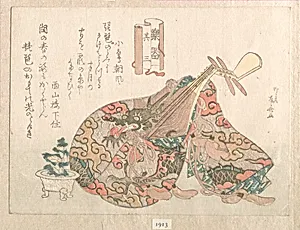
Medium
Woodblock print (surimono); ink and color on paper
Dimensions
5 1/2 x 7 3/8 in. (14 x 18.7 cm)
Classification
Prints
Culture & Period
Japan · Edo period (1615–1868)
Department
Asian Art
Museum
Metropolitan Museum of Art, New York, NY
Credit
H. O. Havemeyer Collection, Bequest of Mrs. H. O. Havemeyer, 1929
Accession Number
JP1913
Rights
Public Domain
Tags
Art Historical Context
Discover the delicate charm of *Biwa with Brocade Cover (*Rakki sono san*), the third print in Ryūryūkyo Shinsai's enchanting series *Musical Instruments*. Created around 1808 during Japan's Edo period (16151868), this wood print (surimono measures a intimate 5½ x 7⅜ inches, showcasing Shinsai's mastery in the ukiyo-e tradition.imono, or "printed things," were luxurious, privately commissioned prints often produced for New Year's greetings or poetry circles, featuring vibrant colors, fine lines, and subtle embossing for a tactile elegance. At its heart is the biwa, a four-stringed lute central to Japanese court music and storytelling traditions, here elegantly sheathed in a richly patterned brocade cover. Shinsai, a poet-artist active in Edo (modern Tokyo), infused his works with haiku-like refinement, blending realism with decorative flair. The meticulous ink and color on paper highlight the instrument's glossy curves and intricate textile motifs, evoking the refined tastes of urban literati. Housed in the Metropolitan Museum of Art's Asian Art Department from the prestigious H. O. Havemeyer Collection, this print captures Edo Japan's cultural fusion of art, music, and poetry—a snapshot of everyday beauty elevated to timeless art. (198 words)
About the Artist
Ryūryūkyo Shinsai · 1799–1823
Ryūryūkyo Shinsai (柳々居辰斎), active from 1799 to 1823, was a prominent Japanese ukiyo-e printmaker based in Edo (modern Tokyo), renowned for his mastery of surimono—luxurious, privately commissioned woodblock prints produced for elite poetry circles and New Year's celebrations. He began his training under Tawaraya Sōri before becoming a student of the legendary Katsushika Hokusai, from whom he recei...