
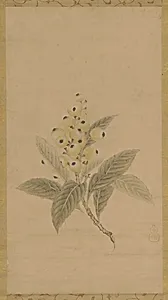
A branch of medlars
17th century
Classification
Painting
Department
Smithsonian Collection
Museum
Smithsonian American Art Museum
Credit
Gift of Charles Lang Freer
Accession Number
F1904.122
Rights
Public Domain
Tags
About this artwork
To 1904
Art Historical Context
Kano Tan'yū (1602–1674), one of the most influential painters of Japan’s Edo period, created this elegant hanging scroll titled *A branch of medlars*. As the leading artist of the Kano school, Tan'yū served the Tokugawa shogunate and helped shape official artistic taste for over two centuries. His work often combined precise observation of nature with refined brushwork, reflecting both the decorative traditions of his family school and the growing interest in naturalistic depiction during the early Edo era. The painting, known as a *kakemono*, would originally have been displayed in a tokonoma alcove during seasonal gatherings or tea ceremonies. Though the exact medium remains unrecorded, such scrolls were typically executed in ink or light color on paper or silk. The simple subject—a single fruiting branch—embodies the Japanese aesthetic of capturing fleeting moments in the natural world, inviting viewers to appreciate both botanical detail and the quiet poetry of seasonal change. Acquired by Charles Lang Freer and later gifted to the Smithsonian, the scroll now forms part of the museum’s distinguished holdings of Japanese art. It offers contemporary visitors a glimpse into the refined visual culture of seventeenth-century Japan, where even the humblest plant could become the focus of masterful artistic attention.