
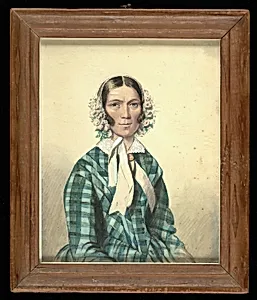
A Pioneer Woman
ca. 1840
Medium
Painting-Miniature
Classification
Painting-Miniature
Department
Smithsonian Collection
Museum
Smithsonian American Art Museum
Credit
Smithsonian American Art Museum, Museum purchase through the Catherine Walden Myer Fund
Accession Number
1963.5
Rights
Public Domain
Tags
About this artwork
It is not always possible to identify the sitter in a miniature portrait, and research is still being done on some of the works in the Museum’s collection. Miniatures became popular in England during the early 1700s, commissioned by wealthy families on the occasions of births, engagements, weddings, and bereavements. These paintings, elaborately set into lockets or brooches, provided the wearer with a sentimental connection to a loved one. The back of the miniature often revealed a lock of the s...
Art Historical Context
**A Pioneer Woman**, a delicate miniature painting from around 1840, captures a waist-length portrait of an unidentified sitter, evoking the resilient spirit of America's frontier era. Created by an unknown artist, this small-scale work belongs to the Smithsonian American Art Museum's collection, purchased through the Catherine Walden My Fund. Miniatures like this were treasured personal artifacts, often no larger than a few inches, designed to be worn close to the heart in lockets or brooches. inating in England during the early 1700s, portrait miniatures surged in popularity among wealthy families to commemorate life's milestones—births, engagements, weddings, and losses. The reverse side frequently held a lock of the sitter's hair, symbolizing deep emotional bonds. By the 1840s in America, these hand-painted gems represented both artistic skill and sentimental value, especially amid the pioneer migrations westward, where such portable mementos connected families across vast distances. The invention of the daguerreotype in 1839 offered a quicker, more affordable alternative, hastening the decline of traditional miniatures. Yet this piece endures as a poignant relic of pre-photographic portraiture, inviting ongoing research into its enigmatic subject and highlighting the intimate artistry of a fading tradition.
About the Artist
Unidentified ( ) · –