
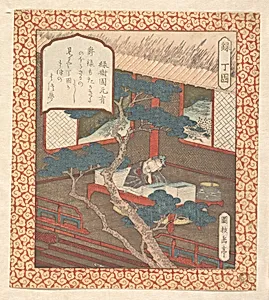
A Sage Fallen Asleep Over His Books
ca. 1820
Medium
Woodblock print (surimono); ink and color on paper
Dimensions
8 3/16 x 7 5/16 in. (20.8 x 18.6 cm)
Classification
Prints
Culture & Period
Japan · Edo period (1615–1868)
Department
Asian Art
Museum
Metropolitan Museum of Art, New York, NY
Credit
Rogers Fund, 1919
Accession Number
JP1132
Rights
Public Domain
Tags
Art Historical Context
In the serene world of Edo-period Japan (1615–1868), Yashima Gaki's *A Sage Fallen Asleep Over His Books* (ca. 1820) captures a whimsical moment of scholarly repose. This intimate woodblock print, or *surimono*, belongs to a refined genre of privately commissioned works, often produced for New Year's celebrations or poetry circles. Unlike mass-market ukiyo-e prints, surimono like this one—measuring just 8 3/16 x 7 5/16 inches—featured luxurious techniques such as subtle embossing, mica dusting, and vibrant colors from hand-mixed pigments, making each impression a bespoke treasure. Gakutei, an Osaka-based artist celebrated for his delicate landscapes and figure studies, infuses the scene with gentle humor: a wise sage slumps over his stacked books, surrounded by lush trees, evoking the timeless pursuit of knowledge amid nature's quiet embrace. The composition highlights the Edo era's fascination with literati culture, blending Confucian ideals of study with ukiyo-e's playful realism. Printed with ink and color on paper, it exemplifies the woodblock process's precision—carved blocks layered for depth and nuance—preserved today in the Metropolitan Museum of Art's Asian Art collection through the Rogers Fund of 1919. This charming print invites visitors to reflect on the human side of wisdom: even sages nod off, reminding us that enlightenment, like art, unfolds in unexpected moments.
About the Artist
Yashima Gakutei · 1786–1868
Yashima Gakutei (c. 1786–1868), born in Osaka as the illegitimate son of a Tokugawa shogunate samurai named Hirata, adopted the name from his mother's subsequent marriage into the Yashima clan. Little is documented about his early years beyond these familial ties, but he pursued artistic training under the esteemed ukiyo-e masters Totoya Hokkei and Katsushika Hokusai, absorbing their precision in ...