
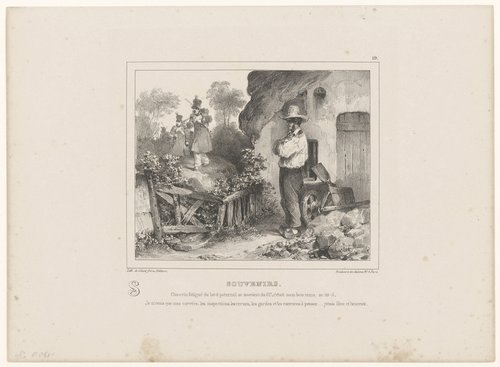
Alphabet moral et philosophique à l'usage des petits et des grands enfants
Medium
lithography
Dimensions
338; 247
Rights
Public Domain
About this artwork
lithografie
Art Historical Context
Nicolas Toussaint Charlet, a prominent French lithographer and painter of the early 19th century, created *Alphabet moral et philosophique à l'usage des petits et des grands enfants* in 1835. This lithograph, measuring 247mm by 338mm, exemplifies the artist's knack for blending education with wit. Charlet, best known for his humorous depictions of Napoleonic soldiers and everyday French life, turned his talents to this moral and philosophical alphabet, designed for both children and adults—suggesting a clever, layered approach to learning. Lithography, the medium here, was revolutionary in the 1830s for its affordability and ability to reproduce detailed drawings en masse, making illustrated books and prints accessible to a wide audience. This technique allowed Charlet to craft intricate vignettes tied to each letter of the alphabet, infusing moral lessons with philosophical undertones amid France's post-Revolutionary cultural shifts toward popular enlightenment. As a cultural artifact, the work reflects the era's fascination with didactic art, using satire to engage young minds while amusing grown-ups. Charlet's caricatural style adds charm and bite, transforming rote learning into a delightful visual journey through ethics and ideas. A gem for visitors interested in 19th-century printmaking and educational satire!
About the Artist
Nicolas Toussaint Charlet · 1792–1845
Comment on works: genre