
Amulet of Harpokrates
Unknown Artist
ca. 1295–1070 B.C. or 1070–664 B.C.
Medium
Lapis lazuli
Dimensions
H: 1.5 cm (9/16 in.)
Classification
Amulet, Harpokrates
Period
New Kingdom, Ramesside or Third Intermediate Period
Department
Egyptian Art
Museum
Metropolitan Museum of Art, New York, NY
Credit
Rogers Fund, 1909
Accession Number
09.180.1181
Rights
Public Domain
Art Historical Context
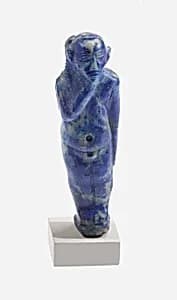
Welcome to the Egyptian Art galleries at the Metropolitan Museum of Art, where we encounter the **Amulet of Harpokrates**, a petite treasure crafted from lapis lazuli around 1295–1070 B.C. (New Kingdom, Ramesside period, Dynasties 19–20) or 1070–664 B.C. (Third Intermediate Period, Dynasties 21–25). Standing just 1.5 cm tall, this unknown artist's work exemplifies the exquisite miniature sculptures ancient Egyptians produced for personal devotion. Harpokrates, the child form of the god Horus (known to Greeks as Harpocrates), is typically shown with a finger to his lips, symbolizing silence, secrecy, and protection against evil. Carved from vibrant lapis lazuli—a rare, deep-blue stone imported from afar and revered for its celestial hue—this amulet would have been worn or carried as a potent talisman. Lapis lazuli's scarcity and luster elevated such objects, blending artistry with spiritual power during Egypt's dynamic New Kingdom and later eras of political flux. Acquired through the Rogers Fund in 1909, this amulet offers a window into everyday ancient Egyptian piety, where even tiny carvings harnessed divine safeguarding for health, fertility, and warding off harm. A reminder of how the divine mingled with the daily!