
Archaic Celt
Unknown Artist
Medium
Nephrite
Dimensions
H. 2 in. (5.1 cm); W. 1 7/8 in. (4.7 cm); L. 1/4 in. (0.7 cm)
Classification
Jade
Culture & Period
China · Han dynasty (206 B.C.–A.D. 220)
Department
Asian Art
Museum
Metropolitan Museum of Art, New York, NY
Credit
Gift of Heber R. Bishop, 1902
Accession Number
02.18.320
Rights
Public Domain
Art Historical Context
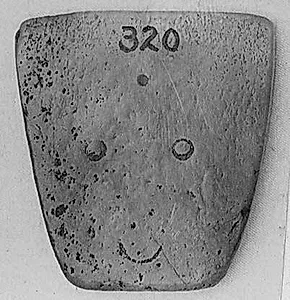
This exquisite nephrite jade celt, measuring just 2 inches high, exemplifies the masterful craftsmanship of China's Han dynasty (206 B.C.–A.D. 220). Carved from nephrite—a tough, resilient variety of jade prized for its creamy green hue and durability—this small, flat blade-like object (H. 2 in.; W. 1⅞ in.; L. ¼ in.) was likely a ceremonial tool or ritual implement, evoking the archaic axe forms of earlier Neolithic traditions. Its polished surfaces and precise edges highlight the Han artisans' skill in working hard stone without metal tools, using abrasion and polishing techniques passed down through generations. In Han China, a period of imperial expansion and cultural flourishing, jade held profound symbolic power, representing purity, immortality, and heavenly authority. Celts like this one were often placed in tombs to accompany the deceased, serving as emblems of status and spiritual protection. Though the exact date and artist remain unknown, its "Archaic" title nods to stylistic echoes of prehistoric jades, blending reverence for the past with Han innovation. Generously gifted to the Metropolitan Museum of Art by Heber R. Bishop in 1902, this piece invites us to ponder ancient rituals and the enduring allure of jade in Chinese art. A true gem of the Asian Art collection!