
ART DU BRODEUR
Medium
Classification
Department
Smithsonian Collection
Museum
Smithsonian American Art Museum
Credit
Purchased for the Museum by the Advisory Council
Accession Number
1921-6-530-6
Rights
Public Domain
About this artwork
Research in Progress
Art Historical Context
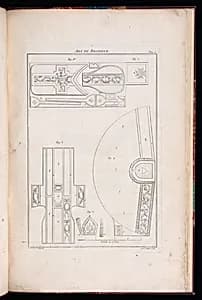
**ART DU BRODEUR** *Charles-Germain de Saint-AubinFrench, 1721–1786), 1770* *Print; Smithsonian American Art Museum* in 1770, *Art du Brodeur* ("The Art of the Emiderer") is a delicate print by Charles-Germain de Saint-Aubin a prolific French engraver, draftsman, and art writer from a celebrated family of artists. Working amid the elegance of the late Rococo and early Neoclassical periods, Saint-Aubin specialized in detailed illustrations that celebrated the fine arts and crafts of his time. This work, likely an etching or engraving, offers a window into the world of embroidery—a luxurious trade prized in 18th-century France for adorning aristocratic garments and furnishings with intricate silk threads and gold motifs. The print's title suggests a focus on the *brodeur*'s (embroiderer's) techniques, tools, and workspace, reflecting the Enlightenment-era fascination with documenting *métiers* (skilled trades). Such images preserved vanishing artisanal knowledge amid industrialization's rise, blending technical precision with artistic flair. Saint-Aubin's lively line work captures the grace and dexterity required, making everyday craftmanship appear poetic. Acquired for the Smithsonian American Art Museum through the Advisory Council's purchase, this piece bridges European traditions with American collections, inviting visitors to appreciate how global artistry shaped cultural heritage. Research continues to uncover more about its creation, but its charm endures as a tribute to masterful hands. (198 words)