
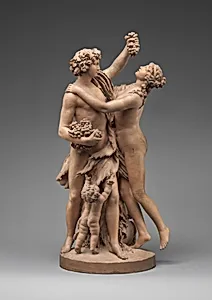
Bacchus and a Nymph with a Child and Grapes
ca. 1790–1800
Medium
Terracotta
Dimensions
Height: 18 1/2 in. (47 cm)
Classification
Sculpture
Culture
French, Paris
Department
European Sculpture and Decorative Arts
Museum
Metropolitan Museum of Art, New York, NY
Credit
Bequest of Benjamin Altman, 1913
Accession Number
14.40.679
Rights
Public Domain
Tags
Art Historical Context
Nestled in the European Sculpture and Decorative Arts collection at the Metropolitan Museum of Art, *Bacchus and a Nymph with a Child and Grap* is a charming terracotta sculpture by the French artist Clodion (Claude Michel), created around 1790–1800. Standing at 18½ inches tall, this intimate group captures the Roman god of wine, Bacchus, in playful companionship with a nymph and a child, surrounded by clusters of grapes. The scene evokes a moment of tender revelry, blending mythology with everyday joy in Clodion's signature lively style. Clodion, a Parisian sculptor active during the late Rococo period transitioning into Neoclassicism, excelled in terracotta—a versatile, earthy medium prized for its warmth and malleability. Often used for preparatory models (modelli), terracotta allowed artists like him to refine fluid poses and expressive gestures before committing to marble or bronze. Here, the material's subtle color and texture enhance the sensual, animated forms, reflecting France's cultural fascination with classical antiquity amid the Enlightenment and pre-Revolutionary fervor. This work, bequeathed by Benjamin Altman in 1913, highlights enduring themes of fertility, indulgence, and nature's bounty. Its whimsical yet refined charm invites visitors to linger, appreciating how Clodion infused ancient myths with 18th-century Parisian elegance.