
Barnabus Bates
ca. 1850
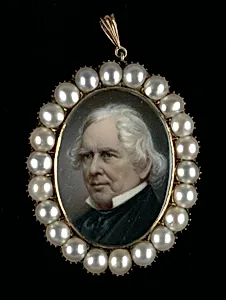
Medium
Painting-Miniature
Classification
Painting-Miniature
Department
Smithsonian Collection
Museum
Smithsonian American Art Museum
Credit
Smithsonian American Art Museum, Museum purchase through the Catherine Walden Myer Fund
Accession Number
1963.9.2
Rights
Public Domain
Tags
About this artwork
There are many Americans of this name on record, but this may be the Barnabas Bates who served as New York’s assistant postmaster between 1833 and 1836. Born in Edmonton, England, Bates settled in New York City in 1830, where he opened a bookstore and published a small weekly journal. He soon left these positions and began working for the New York Democratic Party and the Equal Rights Party. He served as an advocate for reduced postal rates, which made public communication possible for a greater...
Art Historical Context
This delicate miniature portrait, titled *Barnabus Bates* and painted around 1850, captures a bust-length likeness of a man possibly identified as Barnabas Bates, a notable figure in 19th-century New York. Born in Edmonton, England, Bates immigr to New York City in1830, where he a bookstore, published a weekly journal, and immersed himself in politics with the Democratic and Equal Rights Parties. His advocacy for reduced postal rates groundbreaking, democratizing communication for everyday Americans and paving the way for broader public access to mail services. Tragically, Bates passed away in 1853, just years after this artwork's creation. As a miniature painting—a cherished Victorian-era format often rendered on ivory in fine detail for personal wear or keepsakes—this piece exemplifies intimate portraiture. Its small scale allowed for portability and emotional closeness, ideal for loved ones. The inclusion of pearls, symbolizing tears in Victorian mourning customs, hints that this may have served as mourning jewelry, commemorating Bates shortly before his death. Housed in the Smithsonian American Art Museum through the Catherine Walden Myer Fund, it offers a poignant glimpse into personal loss and 19th-century American innovation.
About the Artist
Unidentified ( ) · –