
Beauty with Letter
19th century
Medium
Matted painting; ink and color on paper
Dimensions
15 1/2 x 7 5/8 in. (39.4 x 19.4 cm)
Classification
Paintings
Culture & Period
Japan · Edo period (1615–1868)
Department
Asian Art
Museum
Metropolitan Museum of Art, New York, NY
Credit
H. O. Havemeyer Collection, Bequest of Mrs. H. O. Havemeyer, 1929
Accession Number
29.100.534
Rights
Public Domain
Tags
About this artwork
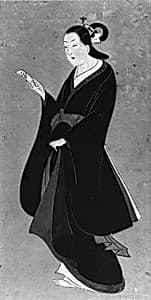
This painting depicts a courtesan or beauty holding a letter, presenting the elegant female figure as a study in refined deportment and fashionable dress. The composition emphasizes the woman's graceful pose and elaborate kimono, rendered with bold lines and confident brushwork characteristic of ukiyo-e painting traditions. The letter serves as a narrative element suggesting romantic communication, a theme common in depictions of the pleasure quarters where literacy and aesthetic accomplishment ...
Art Historical Context
"Beauty with Letter," a 19th-century matted painting in ink and color on paper Japan's Edo period (16151868), captures a courtesan in a moment of poised elegance. Attributed to the Kaigudō school—followers of the innovative Kaigetsudō Ando, active in the late 17th early 18th centuries work exemplifies bijin-ga, or paintings of beautiful women. The solitary figure stands against a plain background, her graceful deportment and elaborate kimono the spotlight, with the letter in hand hinting at romantic intrigue from the pleasure quarters. The school's signature style shines through in bold, confident brushwork and monumental compositions that celebrate luxurious textiles and idealized feminine proportions. Rooted in ukiyo-e traditions, these paintings blend representational detail with decorative stylization, using traditional East Asian materials to evoke refined beauty and fashion. Though created long after the founder's era, this piece reflects the Kaigetsudō manner's lasting appeal. Culturally, such images documented contemporary trends in the Yoshiwara district, where literacy and aesthetic grace were courtesans' prized traits. Part of the H. O. Havemeyer Collection at the Metropolitan Museum of Art, it offers a window into Edo Japan's fascination with feminine allure as both art and social mirror.