
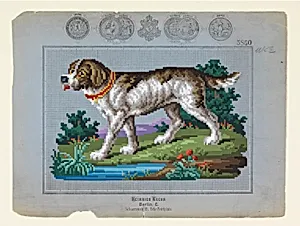
Berlin Wool Work: Hunting Dog
ca. 1879
Classification
textile designs
Department
Smithsonian Collection
Museum
Smithsonian American Art Museum
Credit
Gift of kaltenberg
Accession Number
1953-69-1
Rights
Public Domain
About this artwork
Research in Progress
Art Historical Context
**Berlin Wool Work: Hunting Dog *Heinrich Kuehn, Berlin, ca. 9* Smithsonian American Art Museum, Gift of KaltenbergStep into the world of 19th-century domestic artistry with *Berlin Wool Work: Hunting*, a charming textile design created around 1879 by Heinrich Kuehn Berlin. This piece exemplifies "Berlin wool work," a popular embroidery technique where colorful wool yarns were stitched onto canvas using mass-produced patterns originating from Berlin, Germany. These designs flooded homes across Europe and America, transforming everyday needlework into accessible, vibrant decorations. Historically, Berlin wool work surged in popularity during the Victorian era, peaking in the 1830s–1880s as an affordable craft for women of various classes. It symbolized leisure, skill, and sentimentality, often featuring animals like this alert hunting dog—a nod to aristocratic hunting traditions and the era's fascination with faithful companions. Kuehn, working from Berlin's renowned pattern hubs, contributed to this global phenomenon, blending folk art with commercial precision. Today, housed in the Smithsonian American Art Museum's textile designs collection, this work highlights the overlooked artistry of needlework. Though research continues, it invites us to appreciate how everyday crafts wove cultural stories into the fabric of home life, bridging utility and beauty in the late 19th century. (198 words)