
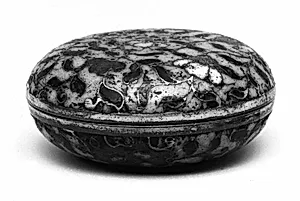
Box with Cover
Unknown Artist
late 16th–early 17th century
Medium
Cloisonné enamel
Dimensions
Diam. 2 3/16 in. (5.6 cm)
Classification
Cloisonné
Culture & Period
China · Ming dynasty (1368–1644)
Department
Asian Art
Museum
Metropolitan Museum of Art, New York, NY
Credit
Gift of Edward G. Kennedy, 1929
Accession Number
29.110.36a, b
Rights
Public Domain
Art Historical Context
This exquisite *Box with Cover*, crafted in cloisonné enamel during China's Ming dynasty (late 16–early 17th), exemplifies the era's pinnacle of technical virtuosity and aesthetic refinement. Measuring just 2 3/16 inches (5.6 cm) in diameter, this petite lidded container was likely designed for personal luxury—perhaps holding cosmetics, seals, or precious spices—reflecting the Ming court's fascination with intricate, portable treasures. Cloisonné enamel, a signature medium of Ming artistry, involves soldering fine metal wires onto a copper body to create tiny cells (cloisons), which are filled with colorful vitreous enamels and repeatedly fired to fuse them into a vibrant, durable surface. Imported from the Islamic world centuries earlier, the technique reached new heights in Ming China, where it adorned imperial wares with motifs like florals, dragons, or landscapes symbolizing harmony and prosperity. This anonymous masterpiece showcases the anonymous artisans' mastery, blending bold colors and precise detailing in a form that bridged functionality and opulence. Housed in the Metropolitan Museum of Art's Asian Art Department as a 1929 gift from Edward G. Kennedy, the box offers a window into late Ming material culture, when such objects signified elite status amid a booming export trade to Europe. Its survival highlights the enduring allure of Ming innovation, inviting us to marvel at the delicate hands behind its creation.