
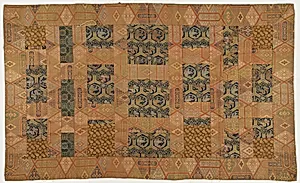
Brocade, silk. A Buddhist monk's robe, patched; kesa 袈裟
1615-1868
Classification
Costume and Textile
Department
Smithsonian Collection
Museum
Smithsonian American Art Museum
Credit
Gift of Charles Lang Freer
Accession Number
F1916.663
Rights
Public Domain
Tags
About this artwork
To 1916
Art Historical Context
This exquisite silk brocade kesa, or Buddhist monk's robe, to Japan's Edo period (16151868), a time of relative peace and cultural flourishing under the Tokugawa shogunate. Crafted with intricate weft patterning—a brocading technique where supplementary wefts create raised, shimmering designs—the robe exemplifies the fusion of luxury materials and spiritual humility. Patched together from fabric scraps, as indicated by its repaired sections, the kesa embodies Zen Buddhist ideals: monks traditionally assembled these garments from discarded textiles to symbolize detachment from worldly attachments and equality before enlightenment. In Japanese Buddhist tradition, the kesa is not mere clothing but a sacred vestment worn during rituals, representing the Buddha's robe. Its silk brocade, often featuring subtle motifs, highlights the Edo era's mastery of textile arts, where artisans balanced opulence with restraint. This piece, from the Smithsonian American Art Museum's collection, was a gift from Charles Lang Freer, the pioneering collector whose donations formed the core of the Freer Gallery of Art. Though its exact provenance traces only to 1916, this robe offers visitors a tactile glimpse into Edo Japan's devotional life, where beauty served faith.
About the Artist
Unknown
The artist designated as "Unknown" in our virtual museum's collection exemplifies a poignant chapter in art history: creators whose identities have faded into obscurity despite the enduring power of their work. With only one known artwork attributed to them in our holdings, this figure represents countless anonymous hands that shaped visual culture across centuries. Museums worldwide, including th...