
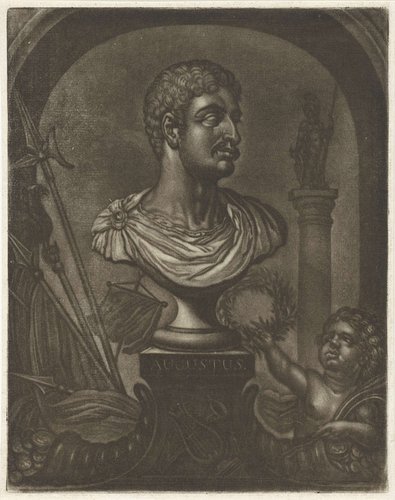
Buste van keizer Augustus
1740 - 1774
Medium
paper
Dimensions
242; 189
Rights
Public Domain
About this artwork
Een putto met een lauwerkrans en geld wijst op een buste van keizer Augustus. Naast de buste liggen de hoorn des overvloeds en wapens. Op de achtergrond klassieke zuil.
Art Historical Context
This delicate drawing on paper, created by Dutch artist Pieter Anthony Wakkerdak between 1740 and 1774, captures a symbolic tribute to Emperor Augustus. Measuring just 242 by millimeters, the work depicts putto holding a laurel wreath and coins while gesturing toward the Roman ruler’s bust. Nearby rest a cornucopia and weapons, with a classical column rising in the background. The composition blends allegorical elements to evoke Augustus’s reign as an era of prosperity, military strength, and cultural revival. Wakkerdak’s choice of paper suggests an intimate study or print intended for collectors fascinated by antiquity during the Enlightenment. Such imagery reflects the 18th-century European revival of Roman ideals, where emperors like Augustus symbolized enlightened governance and lasting peace. The artwork invites viewers to appreciate how classical motifs continued to inspire artists long after the empire’s fall.
About the Artist
Pieter Anthony Wakkerdak · 1729–1774
Pieter Anthony Wakkerdak (1729–1774) was a Dutch printmaker, painter, draughtsman, publisher, and poet whose brief but productive career exemplified the versatility expected of 18th-century Dutch artists. Born on June 14, 1729, in Rotterdam and dying on November 28, 1774, in Delft at just forty-five years old, Wakkerdak worked across multiple media including mezzotint (black art), oil painting, en...