
Button
late 18th century
Medium
costume & accessories
Classification
costume & accessories
Department
Smithsonian Collection
Museum
Smithsonian American Art Museum
Credit
Gift of R. Keith Kane from the Estate of Mrs. Robert B. Noyes
Accession Number
1949-94-6
Rights
Public Domain
About this artwork
Research in Progress
Art Historical Context
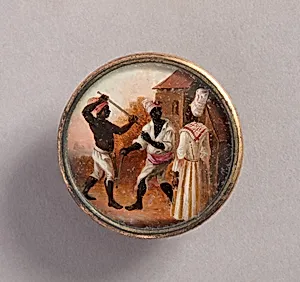
**Button** *Agostino Brunias (Italian, ca. 1730–1796), late 18th century*Costume & accessories; Smithsonian Collection, Smithsonian American Art Museum. Gift of R. Keith from the Estate of Mrs Robert B. Noyes. This delicate button, attributed to Italian artist Agostino Brunias, to the late 18th century—a vibrant era of transatlantic exchange and colonial fashion. Brunias, best known for his colorful genre paintings capturing the multicultural life of the British West Indies where he worked for elite patrons, occasionally bridged fine art and everyday objects. Though research on this piece is ongoing, it reflects his era's blend of European craftsmanship and New World influences, arriving in the Smithsonian American Art Museum as part of a generous gift. In the 1700s, buttons evolved from simple fasteners to elaborate accessories, often crafted from metal, fabric, or shell, adorning waistcoats, coats, and uniforms. They signaled social status amid Enlightenment ideals of refinement and the growing Atlantic trade in luxury goods. This example invites us to ponder Brunias' world: bustling Caribbean ports where Italian artistry met British colonial style. Explore this artifact to appreciate how even the smallest objects tell big stories of migration, trade, and identity. Ongoing research promises deeper revelations! (198 words)