
Button
late 19th–early 20th century
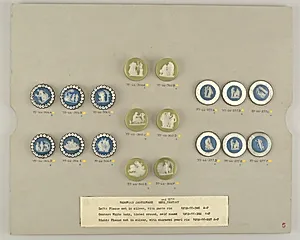
Medium
costume & accessories
Classification
costume & accessories
Department
Smithsonian Collection
Museum
Smithsonian American Art Museum
Credit
Bequest of Julia Hutchins Wolcott
Accession Number
1959-66-306-b
Rights
Public Domain
About this artwork
Research in Progress
Art Historical Context
This unassuming yet intriguing "Button" from the late 19th to early 20th century a glimpse into everyday fashion from America's Gilded Age and Progressive Era. Classified as a costume accessory and housed in the Smithsonian American Museum's collection, it arrived via the generous bequest of Julia Hutch Wolcott. While research on this piece is ongoing, buttons like this were essential fasteners in clothing, often elevated to miniature works of art through intricate designs and materials. During this transitional period, buttons reflected evolving tastes in personal adornment. Victorians favored elaborate, symbolic motifs—think floral patterns or cameos—crafted from glass, metal, or shell to denote social status or sentiment. As mass production rose in the early 1900s, they became more accessible, blending functionality with subtle artistry. This button likely served on a garment or accessory, embodying the era's blend of craftsmanship and industrialization. Today, such artifacts remind us how small objects capture broader cultural shifts. Donated to the Smithsonian, it joins a treasury of American material culture, inviting visitors to ponder the hands that wore it and the stories it silently holds. Ongoing research promises to reveal more about its origins and maker.
About the Artist
Unknown
The artist designated as "Unknown" in our virtual museum's collection exemplifies a poignant chapter in art history: creators whose identities have faded into obscurity despite the enduring power of their work. With only one known artwork attributed to them in our holdings, this figure represents countless anonymous hands that shaped visual culture across centuries. Museums worldwide, including th...