
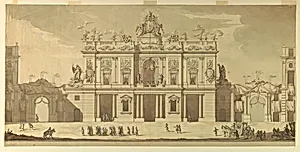
Cardinal Pamphili Villa, Facade Decorated for a Visit of Pope Clement XIII
Classification
architecture
Department
Smithsonian Collection
Museum
Smithsonian American Art Museum
Credit
Museum purchase through gift of various donors and from Eleanor G. Hewitt Fund
Accession Number
1938-88-896
Rights
Public Domain
About this artwork
Research in Progress
Art Historical Context
Step into the grandeur of 18th-century with Paolo Posi's *Cardinal Pamphili Villa Facade Decorated for Visit of Pope Clement XIII (1758–69). This architectural design captures the opulent temporary decorations adorning the villa's facade to honor Pope Clement XIII's. Posi, a prominent Italian architect (1708–1776) known for his work in the Eternal City, specialized in Baroque restorations and festive embellishments that blended architecture with theatrical spectacle. In the mid-18th century, such elaborate facades were a hallmark of Roman papal culture, transforming private palaces into public stages of devotion and power. The Villa Pamphili, seat of the influential Pamphili family, would have been festooned with garlands, statues, banners, and illuminated frameworks to dazzle the pontiff and his entourage, reflecting the era's fusion of piety, politics, and artistry. Posi's design exemplifies the Baroque emphasis on drama, movement, and illusion, drawing from traditions of *apparati effimeri*—ephemeral setups for elite events. Housed in the Smithsonian American Art Museum through a generous museum purchase, this work invites us to imagine the flickering torchlight and cheering crowds of a bygone Rome, highlighting how architecture served fleeting yet memorable moments of historical splendor. (198 words)