
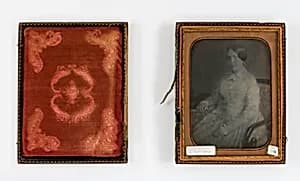
Caroline Lamb Norris
ca 1855
Medium
Photography-Photoprint
Classification
Photography-Photoprint
Department
Smithsonian Collection
Museum
Smithsonian American Art Museum
Credit
Smithsonian American Art Museum, Gift of Charles Isaacs and Carol Nigro
Accession Number
1999.86.2
Rights
Public Domain
Tags
Art Historical Context
**Caroline Lamb Norris** (ca. 1855) is a striking waist-length portrait by Marcus Root, a pioneering American photographer known for his technical mastery in the early days of the medium. Captured as a photoprint—a paper-based image printed from a glass negative—this work exemplifies the transition from one-of-a-kind daguerre to reproducible photographs, making portraiture more accessible in mid-19th-century America Root, who ran influential studios in Philadelphia and St. Louis alongside his brothers, brought a refined sensitivity to his subjects, often posing them with quiet dignity against plain backdrops to emphasize personal presence. Created around 1855, during photography's explosive popularity, this image reflects a cultural shift: what was once the privilege of painted portraits became attainable for the growing middle class. Families like the Norrises commissioned such photos to commemorate loved ones, preserving their likenesses amid rapid social changes, including westward expansion and the Civil War's looming shadow. The photoprint's warm tones and fine detail highlight Root's skill in lighting and chemistry, techniques that elevated photography from novelty to art. Today, housed in the Smithsonian American Art Museum through a generous gift from Charles Isaacs and Carol Nigro, *Caroline Lamb Norris* offers a window into everyday American lives, reminding us how early photographers like Root captured the human spirit with unprecedented realism and intimacy.