
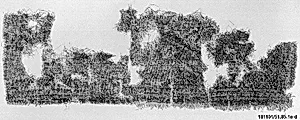
Carpet Fragment
Unknown Artist
8th century
Medium
Wool, cotton, or linen
Dimensions
H. 9 3/8 in. (23.8 cm) W. 8 1/4 in. (21 cm)
Classification
Textiles-Rugs
Department
Islamic Art
Museum
Metropolitan Museum of Art, New York, NY
Credit
Gift of Phocion J. Tano, 1951
Accession Number
51.85.1b
Rights
Public Domain
Art Historical Context
This exquisite carpet fragment, dating to the 8th century, offers tantalizing glimpse into the early Islamic world. Housed in the Metropolitan Museum of Art's Department of Islamic Art, this small textile—measuring just 9 3/8 by 8 1/4 inches (23.8 by 21 cm)—was from wool, cotton, or linen materials prized for their durability and versatility in rug weaving. Donated in 1951 by Phocion J. Tano, it survives as a rare remnant of a larger floor covering or prayer rug, highlighting the artistry of anonymous weavers during the Umayyad or early Abbasid eras. In Islamic culture, textiles like this were far more than functional items; they adorned homes, mosques, and tents, symbolizing wealth, piety, and nomadic heritage. The fragment's classification as a rug underscores the sophisticated weaving techniques of the period, likely employing slit-tapestry or kilim methods to create intricate patterns (though faded here). Such pieces were often produced in urban centers like Fustat in Egypt, blending practical utility with geometric motifs inspired by nature and spirituality. Though modest in size, this artifact bridges us to a vibrant era of cultural exchange along Silk Road trade routes, where Islamic artisans elevated everyday wool and fibers into objects of profound beauty and devotion. A true treasure for textile enthusiasts!