
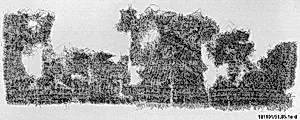
Carpet Fragment
Unknown Artist
8th century
Medium
Wool, cotton, or linen
Dimensions
H. 5 1/2 in. (14 cm) W. 4 3/4 in. (12.1 cm)
Classification
Textiles-Rugs
Department
Islamic Art
Museum
Metropolitan Museum of Art, New York, NY
Credit
Gift of Phocion J. Tano, 1951
Accession Number
51.85.1c
Rights
Public Domain
Art Historical Context
This exquisite carpet fragment, dating to the 8th century, offers a rare glimpse into the early mastery of Islamic textile arts. Housed in the Metropolitan Museum of Art's Department of Islamic Art, this small piece—measuring just 5½ by 4¾ inches (14 by 12.1 cm)—survives as a testament to the sophisticated weaving traditions of the Islamic world during the formative Umayyad or early Abbasid periods. Likely crafted in regions like Egypt, Syria, or Persia, it reflects the era's burgeoning trade networks and cultural exchanges along the Silk Road. Woven from wool, cotton, or linen, the fragment exemplifies the durability and versatility of these natural fibers, which allowed for intricate patterns and vibrant dyes derived from plants and minerals. Carpets held profound cultural importance in Islamic societies, serving not only as floor coverings but also as prayer rugs, wall hangings, and symbols of wealth and piety. Though the artist remains unknown, the survival of such a delicate artifact underscores the exceptional skill of anonymous artisans whose techniques influenced centuries of rug-making. A generous gift from Phocion J. Tano in 1951, this fragment invites visitors to ponder the everyday artistry of medieval life, bridging the gap between ancient craftsmanship and our modern appreciation for Islamic heritage.