
Case (Inrō) with Design of Building beside Winding River in Mountain Landscape and Full Moon
Unknown Artist
19th–20th century
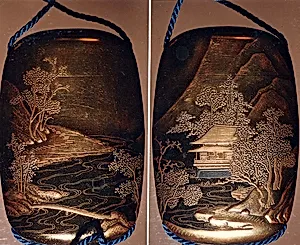
Medium
Lacquer, kinji, gold, silver and black hiramakie, togidashi, nashiji; Interior: nashiji and fundame
Dimensions
3 5/16 x 2 1/4 x 13/16 in. (8.4 x 5.7 x 2 cm)
Classification
Inrō
Culture
Japan
Department
Asian Art
Museum
Metropolitan Museum of Art, New York, NY
Credit
H. O. Havemeyer Collection, Bequest of Mrs. H. O. Havemeyer, 1929
Accession Number
29.100.872
Rights
Public Domain
Tags
Art Historical Context
This exquisite *inrō*, a traditional Japanese lacquer case from the 19th–20th century, served as a portable accessory for men, suspended from the waist by a silk cord and secured with an ivory netsuke. Typically used to carry medicines, seals, or tobacco, these small, tiered boxes (here, 3 5/16 x 2 1/4 x 13/16 in.) embodied the refined artistry of Japan's Edo and Meiji periods, blending functionality with aesthetic splendor. Adorning the elite samurai and merchant classes, *inrō* like this one highlight the cultural emphasis on miniaturization and nature-inspired motifs. The outer design depicts a serene mountain landscape with a winding river, a building nestled beside it, and a luminous full moon—evoking poetic tranquility and the changing seasons, common in Japanese art. Crafted using advanced *makie* lacquer techniques, it features *hiramakie* (flat gold and silver sprinkles), *togidashi* (burnished lacquer revealing underlying designs), *kinji* (gold ground), and *nashiji* (pearlescent gold flecks) on the exterior, with a shimmering *nashiji* and *fundame* (gold and silver powder base) interior. These labor-intensive methods, perfected over centuries, create a luminous, jewel-like depth that captures light beautifully. Part of the Metropolitan Museum of Art's H. O. Havemeyer Collection (1929), this anonymous masterpiece showcases Japan's mastery of lacquerware, a medium rivaling painting in expressive power and enduring the test of time through its durable, glossy finish. A tiny window into Edo-era elegance!