
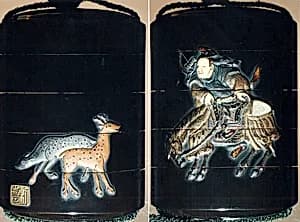
Case (Inrō) with Design of Hunter Dismounting Horse (obverse); Two Spotted Deer (reverse)
Unknown Artist
18th–19th century
Medium
Lacquer, roiro, coloured ceramic and metal inlay; Interior: gyobu nashiji and fundame
Dimensions
3 1/8 x 2 3/16 x 1 1/16 in. (8 x 5.6 x 2.7 cm)
Classification
Inrō
Culture & Period
Japan · Edo period (1615–1868)
Department
Asian Art
Museum
Metropolitan Museum of Art, New York, NY
Credit
H. O. Havemeyer Collection, Bequest of Mrs. H. O. Havemeyer, 1929
Accession Number
29.100.740
Rights
Public Domain
Tags
Art Historical Context
This exquisite inrō, crafted during Japan’s Edo period (1615–1868), exemplifies the refined artistry of portable personal accessories. Inrō served as elegant cases for seals, medicines, or small valuables, suspended from a man’s sash by a cord and netsuke toggle. The unknown artist decorated both sides with a narrative scene: a hunter dismounting his horse on the front and two spotted deer on the reverse. These motifs evoke themes of nature, seasonal change, and the harmony between humans and the wild, popular in Edo decorative arts. The case demonstrates sophisticated lacquer techniques, including roiro (deep black polished lacquer) enriched with colored ceramic and metal inlays. Its interior features gyobu nashiji, a distinctive “pear-skin” gold fleck pattern, and fundame, a fine gold powder surface. Such meticulous craftsmanship transformed functional objects into miniature works of art prized by collectors. Today this piece resides in the Metropolitan Museum of Art’s Asian Art collection, part of the H. O. Havemeyer bequest, offering visitors a glimpse into the refined daily life and aesthetic sensibilities of Edo-period Japan.