
Case (Inrō) with Design of Six Immortal Poets
19th century
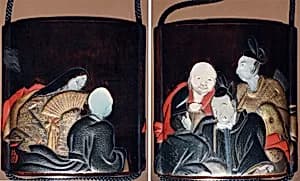
Medium
Gold and silver maki-e with black and red lacquer relief and mother-of-pearl inlay; Ojime: bronze Bodhidharma; Netsuke: carved lacquer Chinese children and auspicious symbols
Dimensions
2 15/16 x 2 5/8 x 1 1/16 in. (7.4 x 6.6 x 2.7 cm)
Classification
Inrō
Culture & Period
Japan · Edo period (1615–1868)
Department
Asian Art
Museum
Metropolitan Museum of Art, New York, NY
Credit
H. O. Havemeyer Collection, Bequest of Mrs. H. O. Havemeyer, 1929
Accession Number
29.100.769
Rights
Public Domain
Tags
Art Historical Context
This exquisite inrō, or portable case, was crafted by the renowned Kajikawa School during Japan’s Edo period (1615–1868), a time when such lacquer containers served as elegant accessories for men of the samurai and merchant classes. Worn suspended from the sash by a cord secured with an ojime bead and netsuke toggle, inrō typically held seals, medicines, or fragrant herbs. The Kajikawa artists specialized in refined lacquer techniques, and this piece exemplifies their mastery through its intricate surface. The decoration features the Six Immortal Poets (Rokkasen), celebrated figures from classical Japanese literature known for their waka poetry. Rendered in gold and silver maki-e—where powdered metals are sprinkled onto wet lacquer—the design incorporates raised relief in black and red lacquer along with shimmering mother-of-pearl inlays. These layered techniques create a luminous, tactile surface that catches the light beautifully. Complementing the case are a bronze ojime depicting the Zen patriarch Bodhidharma and a carved lacquer netsuke showing Chinese children amid auspicious symbols, blending Japanese literary themes with broader East Asian motifs. Such works highlight the Edo period’s fusion of utility, literature, and exquisite craftsmanship, transforming everyday objects into miniature works of art treasured by collectors today.