
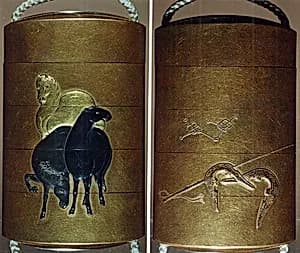
Case (Inrō) with Design of Three Horses Standing (obverse); Saddle Ends and Riding Whip (reverse)
19th century
Medium
Lacquer, kinji, gold and silver hiramakie, various metal inlay; Interior: nashiji and fundame
Dimensions
3 7/16 x 2 1/16 x 13/16 in. (8.8 x 5.2 x 2 cm)
Classification
Inrō
Culture
Japan
Department
Asian Art
Museum
Metropolitan Museum of Art, New York, NY
Credit
The Howard Mansfield Collection, Purchase, Rogers Fund, 1936
Accession Number
36.100.204
Rights
Public Domain
Tags
Art Historical Context
This exquisite 19th-century *inrō*, or lacquer case, crafted by the skilled Japanese artist Kakōs, exemplifies the pinnacle of Edo-period artistry. Worn suspended from a belt by netsuke and ojime (now absent), these compact containers were essential for samurai and merchants to carry medicines, seals, or tobacco, blending functionality with stunning aesthetics. Measuring just 3 7/16 x 2 1/16 x 13/16 inches, piece from The Metropolitan Museum of Art's Howard Mansfield Collection highlights Japan's mastery of lacquerware during a time when such objects became coveted status symbols. The obverse dazzles with three stately horses standing in dynamic poise, rendered in kinji (a lustrous gold ground) enhanced by gold and silver *hiramakie*—a technique where powdered metals are sprinkled and burnished flat for a shimmering, jewel-like effect. The reverse features saddle ends and a riding whip, with intricate metal inlays adding tactile depth. Inside, a pearlescent *nashiji* gold flecking contrasts beautifully with *fundame* gold base, showcasing layered complexity that could take months to perfect. Horses symbolized power, speed, and nobility in Japanese culture, evoking samurai equestrian prowess. Kakōsai's design not only celebrates this motif but preserves a vanishing craft amid Japan's modernization, inviting us to appreciate the patience and innovation behind these wearable treasures.