
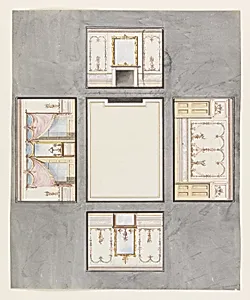
Ceiling and Four Walls of a Room
Medium
architecture, interiors
Classification
architecture, interiors
Department
Smithsonian Collection
Museum
Smithsonian American Art Museum
Credit
Museum purchase through gift of Mrs. John Innes Kane
Accession Number
1948-40-125
Rights
Public Domain
About this artwork
Research in Progress
Art Historical Context
**Ceiling and Four Walls a Room** * Crace (English, 1779–1859), 1815–22 Architecture, interiors; Smithsonian American Art Museum into the elegant world of Regency-era interiors with Frederick Crace's *Ceiling and Four Walls of Room*, a masterful design from 1815–22. Crace, a renowned English and paper-hanger, crafted this comprehensive scheme encompassing an entire room's surfaces. Active during the opulent Regency period (roughly 1811–1820), he specialized in lavish wallpapers and decorative ensembles for elite residences, including royal projects like Brighton Pavilion under George IV. This work exemplifies his expertise in creating immersive environments through intricate patterns, likely featuring neoclassical motifs, gilding, and scenic elements typical of the time. As a prime example of early 19th-century interior architecture, the piece highlights the era's fusion of architecture and decoration, where walls and ceilings became canvases for storytelling and grandeur. Crace's techniques—often involving hand-blocked papers, metallic accents, and panoramic illusions—transformed ordinary spaces into theatrical spectacles, reflecting Britain's post-Napoleonic prosperity and taste for exoticism. Acquired by the Smithsonian American Art Museum through a generous gift, it offers a tangible glimpse into how the elite lived, bridging English craftsmanship with American collections. Though research continues, its presence invites us to ponder the artistry hidden in our surroundings.