
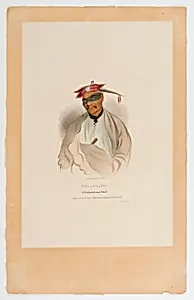
Cha-co-to, a Pottawatomine
Medium
Graphic Arts-Print
Classification
Graphic Arts-Print
Department
Smithsonian Collection
Museum
Smithsonian American Art Museum
Credit
Smithsonian American Art Museum
Accession Number
1985.66.151,677F
Rights
Public Domain
Tags
Art Historical Context
**Cha-co-to, a Pottawatomine** by James Otto Lewis is a bust portrait print from the Smithsonian American Art Museum collection. This graphic arts work captures the poised visage of Cha-co-to, a member of the Potawat people, one of the Great Lakes region's prominent Indigenous nations. As a print medium, it exemplifies early 19th-century techniques allowed for reproducible imagery, making such portraits accessible beyond elite circles. James Otto Lewis, active in the frontier era, specialized in documenting Native American subjects amid rapid U.S. territorial expansion and treaty negotiations. Though the exact date remains unknown, the piece reflects a time when artists sought to record Indigenous leaders and individuals, preserving their likenesses during cultural upheavals like forced relocations. The Potawatomi tag underscores its cultural specificity, highlighting a tribe central to Midwest history. This print's significance lies in its role as ethnographic portraiture, blending artistic skill with historical testimony. Lewis's focused bust composition emphasizes dignity and individuality, offering museum visitors a window into Native American presence in early American visual culture. A poignant reminder of shared heritage. (198 words)