
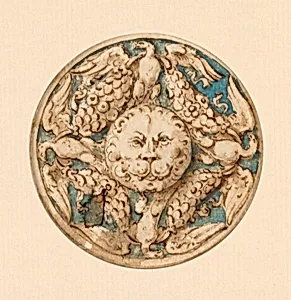
Chased Silver Medallion
Medium
ornament
Classification
ornament
Department
Smithsonian Collection
Museum
Smithsonian American Art Museum
Credit
Gift of Gramercy Park Foundation, Inc.,
Accession Number
1961-18-2
Rights
Public Domain
About this artwork
Research in Progress
Art Historical Context
**Chased Silver Medallion** *Hans Holbein the Younger, 1532–43* Chased silver ornament Smithsonian American Art Museum; Gift of Gramercy Park Foundation, Inc. Hans Holbein the Younger, a master of the Northern Renaissance, crafted this exquisite chased silver medallion during his prolific years in England, where he served as court painter to Henry VIII from the 1530s until his death in 1543. Renowned for his precise portraits and intricate designs, Holbein extended his genius to decorative arts, blending German precision with Tudor opulence. Created between 1532 and 1543, this ornament exemplifies his versatility, likely intended as a personal emblem, badge, or jewelry element for the elite. The "chased" technique—hammering silver from the reverse to raise intricate motifs, then refining details from the front—highlights Holbein's skill in miniature metalwork. This labor-intensive method allowed for delicate patterns evoking Renaissance motifs like foliage, profiles, or allegorical figures, common in Holbein's oeuvre. Though research on this piece is ongoing, it reflects the era's fusion of artistry and craftsmanship, bridging painting and applied arts in a time when such medallions symbolized status and humanism. Today, housed in the Smithsonian American Art Museum, this rare survivor invites us to appreciate Holbein's influence beyond canvas, connecting visitors to the glittering world of 16th-century courts.