
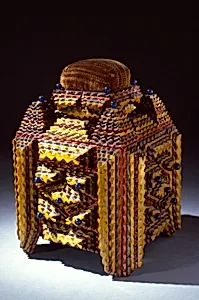
"Cigar Box" Pin Cushion
ca. 1880-1920
Medium
Decorative Arts
Classification
Decorative Arts
Department
Smithsonian Collection
Museum
Smithsonian American Art Museum
Credit
Smithsonian American Art Museum, Gift of Herbert Waide Hemphill, Jr. and museum purchase made possible by Ralph Cross Johnson
Accession Number
1986.65.92
Rights
Public Domain
Tags
Art Historical Context
Step into the charming world of late 19th- and early 20th-century domestic life with the "Cigar Box" Pinion, a delightful example of vernacular decorative arts from the Smithsonian Art Museum. Dating to 1880-1920, this unidentified maker's creation repurposes a sturdy cigar box—once a staple of gentlemen's leisure—into a sewing tool. Pin cushions like this were essential for homemakers, holding needles and pins at the ready for mending, quilting, or dressmaking, reflecting the era's emphasis on thrift and ingenuity. What makes this piece stand out is its fusion of everyday utility and subtle artistry. Cigar boxes, often lithographed with vibrant labels, lent themselves to decorative appeal, transforming a simple storage item into a functional yet eye-catching accessory. Acquired through the generosity of folk art collector Herbert Waide Hemphill, Jr., and a museum purchase supported by Ralph Cross Johnson, it highlights the Smithsonian's commitment to celebrating anonymous creators whose handiwork captured the spirit of American resourcefulness. This unassuming object whispers stories of Victorian-era households, where women turned the ordinary into the extraordinary, blending practicality with personal flair. A true gem of the museum's Decorative Arts collection, it invites us to appreciate the overlooked beauty in daily life.
About the Artist
Unidentified ( ) · –