
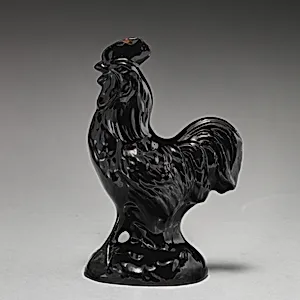
Cock
18th century
Medium
Glazed earthenware
Dimensions
Height: 5 5/8 in. (14.3 cm)
Classification
Ceramics-Pottery
Culture
British, Shropshire
Department
European Sculpture and Decorative Arts
Museum
Metropolitan Museum of Art, New York, NY
Credit
Gift of Mrs. Russell S. Carter, 1945
Accession Number
45.12.80
Rights
Public Domain
Tags
Art Historical Context
Nestled in the European Sculpture and Decorative Arts at The Metropolitan Museum of Art, this charming 18th-century glazed earthenware figure titled *Cock* hails from Jackfield Pottery in Shrops, England. Standing just 5 5/8 inches tall, it depicts a spirited rooster, a beloved motif in British ceramics. The glossy glaze—typical of Jackfield's enameling techniques—brings vibrant color and lifelike sheen to the earthenware, transforming everyday clay into a delightful decorative object. Jackfield Pottery flourished in the mid-18th century as part of England's booming ceramics industry, rivaling Staffordshire potters with their colorful, tin-glazed earthenware. Artisans there mastered bold polychrome enamels fired at lower temperatures, allowing intricate details like the rooster's feathered texture and alert posture. These small animal figures were popular for mantelpieces or as whimsical gifts, reflecting the era's growing middle-class taste for affordable, playful luxury. Symbolizing vigilance and the dawn in folklore, this rooster embodies Shropshire's proud ceramic heritage. Donated in 1945 by Mrs. Russell S. Carter, it invites visitors to appreciate how humble earthenware captured the vibrancy of British life.