
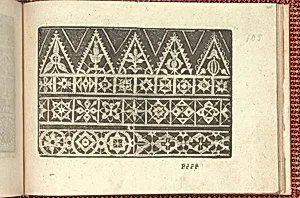
Corona delle Nobili et Virtuose Donne: Libro I-IV, page 105 (recto)
1601
Medium
Woodcut
Dimensions
Overall: 5 1/2 x 7 11/16 in. (14 x 19.5 cm)
Classification
Books|Prints|Ornament & Architecture
Department
Drawings and Prints
Museum
Metropolitan Museum of Art, New York, NY
Credit
Rogers Fund, 1918
Accession Number
18.67.2(107)
Rights
Public Domain
Tags
Art Historical Context
Step into the intricate world of Renaissance Venice with this woodcut from Cesare Vecellio's *Corona delle Nobili ettuose Donne* (Crown of Noble and Virtuous Women), I-IV, page 105 (recto), printed in 1601. Vecellio, a master Venetian engraver renowned for his detailed costume books like *De gli Habiti Antichi et Moderni*, celebrates the elegance and moral virtues of noblewomen through ornamental designs. This modest yet finely executed page, measuring just 5½ x 7⅝ inches, exemplifies the era's fascination with fashion, heraldry, and feminine ideals. Crafted as a woodcut—a technique ideal for book illustrations due to its durability and ability to produce sharp, repeatable images—this print falls under the Met's Drawings and Prints department, classified among Books, Prints, Ornament & Architecture. Woodcuts like this allowed Vecellio to capture elaborate patterns, motifs, and architectural flourishes with precision, reflecting the Renaissance blend of artistry and craftsmanship. Acquired through the Rogers Fund in 1918, this artifact offers a window into 17th-century European culture, where such books served as both aesthetic treasures and social guides, extolling the grace of virtuous women amid ornate splendor. A delightful glimpse of history's finery!
About the Artist
Cesare Vecellio · 1521–1601
Cesare was a distant cousin of the famous Titian, and studied in his shop. He was a member of the branch of Vecellio descended from Giovanni Antonio. He is best known for his prints; he published illustrated books on costume, embroidery and lacemaking, and other subjects. Francesco, Cesare, Orazio and Marco were the only family members allowed to use the appellation "di Tiziano." Comment on works:...