
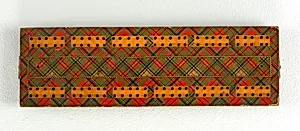
cribbage board
ca. 1880–1900
Medium
toys & games
Classification
toys & games
Department
Smithsonian Collection
Museum
Smithsonian American Art Museum
Credit
Smithsonian American Art Museum
Accession Number
1990-153-3
Rights
Public Domain
About this artwork
Research in Progress
Art Historical Context
Step into the leisurely world of late 19th-century Americanimes with this cribbage board, dating from around 1880–1900. Housed in the Smithsonian American Art Museum's collection classified under toys & games, this unassuming artifact captures the essence of Victorian-era recreation. Cribbage, a beloved card game invented in the 17th century, used such boards to track scores with pegs, making it a staple in parlors, taverns, and family gatherings across the United States. Crafted during a time when board games symbolized social bonding and simple pleasures amid rapid industrialization, this piece reflects the ingenuity of everyday American craftsmanship. Though the artist remains unknown and research is ongoing, its inclusion in the Smithsonian highlights its role as folk art—where functionality met modest decoration, often in wood with intricate scoring tracks and peg holes. These boards were more than toys; they fostered competition and camaraderie, bridging generations. Today, this cribbage board invites us to appreciate the artistry in the ordinary, reminding visitors of how games wove into the cultural fabric of Gilded Age America, preserving moments of joy in a changing world. (198 words)
About the Artist
Unknown
The artist designated as "Unknown" in our virtual museum's collection exemplifies a poignant chapter in art history: creators whose identities have faded into obscurity despite the enduring power of their work. With only one known artwork attributed to them in our holdings, this figure represents countless anonymous hands that shaped visual culture across centuries. Museums worldwide, including th...