
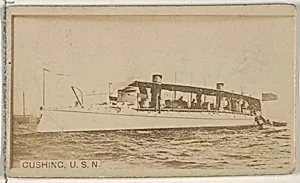
Cushing, U.S.N., from the Famous Ships series (N50) for Virginia Brights Cigarettes
1895
Medium
Albumen photograph
Dimensions
Sheet: 1 1/2 x 2 5/8 in. (3.8 x 6.7 cm)
Classification
Photographs|Ephemera
Department
Drawings and Prints
Museum
Metropolitan Museum of Art, New York, NY
Credit
The Jefferson R. Burdick Collection, Gift of Jefferson R. Burdick
Accession Number
63.350.203.50.34
Rights
Public Domain
Tags
Art Historical Context
Step into the world of 19th-century ephemera with *Cushing, U.S.N.*, a diminutive yet captivating albumen photograph from Allen & Ginter's Famous series (N50), in 1895 to promote Virginia Brights Cig. Produced by the innovative tobacco firm Allen & Ginter—pioneers of collectible trading cards—these pocket-sized cards (just 1 1/2 x 2 5/8 inches) turned everyday cigarette packs into treasure troves for enthusiasts, blending commerce with naval nostalgia. The image honors the USS *Cushing*, a sleek torpedo boat of the U.S. Navy, symbolizing America's growing maritime prowess in the post-Civil War era. Named after Civil War hero William Barker Cushing, the ship represented cutting-edge naval technology, emphasizing speed and agility in an age of imperial expansion. Albumen prints, made by coating paper with egg-white emulsion and silver salts, delivered sharp, luminous details ideal for such tiny formats, capturing the vessel's intricate rigging and hull with remarkable fidelity. Today, this card resides in The Metropolitan Museum of Art's Jefferson R. Burdick Collection, a testament to the cultural allure of these once-disposable inserts. They fueled early collecting hobbies, bridging art, history, and popular culture in a single, shipshape package.
About the Artist
Allen & Ginter
Allen & Ginter, the pioneering American tobacco firm based in Richmond, Virginia, emerged around 1880 from the partnership of John F. Allen and Lewis Ginter, evolving from Allen's earlier John F. Allen & Company. Allen retired in 1882, succeeded by John Pope, yet the brand endured under Ginter's leadership, employing over 1,100 workers—mostly women—for hand-rolled cigarettes by 1886. Ginter, a Dut...