
De joodse man
1486 - 1488
Medium
paper
Dimensions
85; 115; 107; 122
Rights
Public Domain
About this artwork
collector's mark: Lugt 2228
Art Historical Context
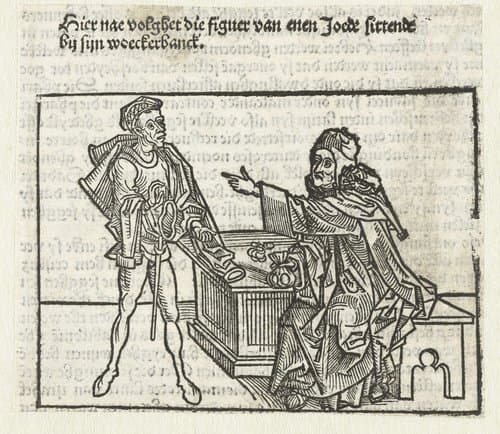
Created around 1486–1488, *De joodse man* is a small paper print measuring just 85 by 115 millimetres. Its creator, Erhard Reuwich, was a Dutch artist and woodcutter best known for producing the illustrations that accompanied Bernhard von Breydenbach’s *Peregrinatio in Terram Sanctam*, one of the earliest printed travel books. This modest sheet likely originated as part of that ambitious project, which documented the journey from Europe to the Holy Land and featured some of the first printed images based on direct observation rather than medieval convention. Reuwich’s work marks an important moment in the transition from hand-copied manuscripts to reproducible printed imagery. Using the relatively new medium of the woodcut on paper, he could circulate detailed likenesses of people and places to a wider European audience. The title suggests the print depicts a Jewish inhabitant of the region, reflecting both the curiosity and the ethnographic interests of late-fifteenth-century pilgrims. Although tiny in scale, the work reveals Reuwich’s attention to costume and posture, offering modern viewers a rare early glimpse of cross-cultural encounter captured in print. Its survival, evidenced by the collector’s mark on the sheet, underscores the value placed on these pioneering illustrations through the centuries.
About the Artist
Erhard Reuwich · 1425–1503
Erhard Reuwich (ca. 1445–ca. 1500) was a pioneering German artist and printmaker whose illustrations for the first printed travel book revolutionized European book illustration. Coming from a family of painters in Utrecht, with his father likely being Hildebrand Reuwich, Dean of the painters' guild in 1470, Erhard represented a new generation of artists who recognized printing's transformative pot...